CASS organised seminar on Water as a Weapon in Modern-day Conflict
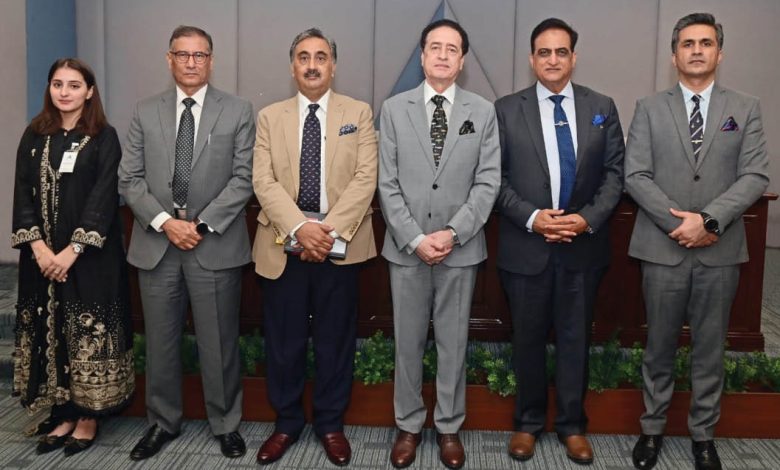
Islamabad
The Centre for Aerospace and Security Studies (CASS) Lahore organised a seminar titled, “Water as a Weapon in Modern-day Conflict: From International Treaties to Maritime Chokepoints,” on 18 June 2026.
As an independent think tank, CASS Lahore organises academic events for scholars and practitioners interested in national security in its wider context.
The event was attended by academics, intellectuals, and domain experts. Air Marshal Irfan Ahmad, Director National Security at CASS Lahore, delivered the opening address.
Syed Muhammad Mehar Ali Shah, Pakistan Commissioner for Indus Waters, framed South Asian water governance as “hydrostrategy,” blending infrastructure, law, and political signalling.
IWT has provided stability in post-1948 water sharing, while the Indus Basin underpins Pakistan’s reliance on dams and barrage systems.
He highlighted emerging challenges like data control, flow regulation and “hydro-coercion,” where water management can be used as a tool of strategic pressure.
He called for coordinated legal, technical, and diplomatic efforts, better storage, and evidence-based policies to achieve sustainable water governance.
Vice Admiral Ahmed Saeed described waterways as strategic assets including ports, sea routes, chokepoints, and maritime law. UNCLOS 1982 ensures balance between navigation freedom and coastal states’ rights.
He highlighted Pakistan’s advantageous position in the Indian Ocean, where around 95% of trade and energy imports move by sea, serving as a bridge with global maritime trade.
He emphasised Pakistan’s $40 billion untapped maritime potential, and called for sustained investment, governance, and consistent policies for sustainable growth.
Ahmer Bilal Soofi, President RSIL, explained that international law operates through peacetime, armed conflict, and occupation regimes.
He described academic and institutional processes shaping doctrines like self-defence under Article 51, including anticipatory interpretations. Under UNCLOS 1982, freedom of navigation, blockades, and accountability for conflict damages were discussed.
He referred to India’s abrogation of Article 370, developments in IIOJK, and hydrological measures, stating that “Sindoor 2.0” perpetuates a conflict mindset, undermining regional stability.
In his concluding remarks, Air Marshal Asim Suleiman (Retd), President CASS, Lahore, highlighted water’s use as a geopolitical instrument.
He emphasised Indus Rivers’ importance to Pakistan’s economy, raising concerns over India’s use of water as a weapon of mass destruction, for which it has to face extreme consequences.
India’s unilateral decision to put the IWT in abeyance is not accepted by Pakistan, and denies it vehemently. He stated that IWT remains legally binding and cited PCA’s ruling upholding Pakistan’s position.
He observed that Iran used its prerogative according to the UNCLOS to block the Strait of Hormuz as its security was under threat. He concluded that weaponisation of IWT and Strait of Hormuz carry serious economic implications for the region and globe.
The event concluded with a lively interactive session. It highlighted navigation charges, blockade’s effects, and India’s violations of international law. The participants appreciated CASS Lahore’s initiative in hosting an engaging and thought-provoking discussion.