APBF welcomes growth targets, wants realistic implementation in Budget
Islamabad
The All Pakistan Business Forum (APBF) has expressed a cautious response to the federal government’s Budget 2026-27 macroeconomic framework, stating that while the growth and employment targets are ambitious, their success will depend on practical policy execution, business-friendly reforms, and stability in the economic environment.
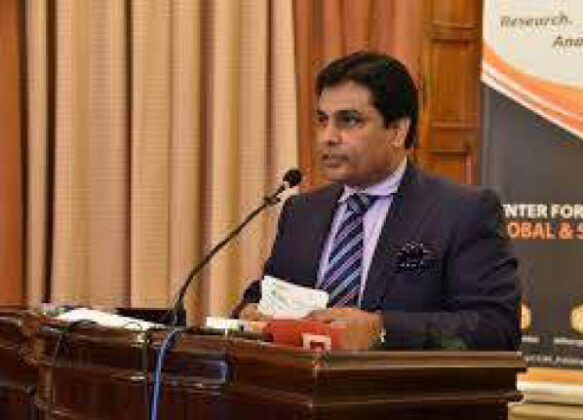
In a statement issued here, APBF President Maaz Mahmood appreciated the government’s focus on economic expansion, employment generation, and macroeconomic stability, but emphasized that Pakistan’s business community has repeatedly seen promising targets fail to translate into ground realities due to structural weaknesses and policy inconsistency.
He noted that the government’s projection of 4 per cent GDP growth, inflation at 8.2 per cent, and creation of two million jobs reflects an optimistic economic outlook. However, they stressed that achieving these goals would require deep reforms in taxation, energy pricing, industrial competitiveness, and investment facilitation.
Maaz Mahmood said that the proposed growth trajectory signals confidence in economic recovery, but warned that without reducing the cost of doing business, improving energy supply chains, and ensuring policy continuity, sustained growth will remain difficult. He added that exporters and industrialists continue to face high input costs, limited liquidity, and regulatory challenges that weaken their global competitiveness.
Chairman Ibrahim Qureshi said that the target of creating two million jobs in the upcoming fiscal year is encouraging, but raised concerns over whether sufficient private sector expansion and industrial capacity exist to absorb such a large workforce. He stated that job creation must be backed by real sector growth rather than temporary public sector-driven initiatives.
The APBF President also highlighted concerns regarding the projected savings and investment ratios, noting that Pakistan’s investment levels remain low compared to regional economies. They stressed that increasing investment to 15 per cent of GDP will require strong investor confidence, consistent fiscal policies, and improved ease of doing business indicators.
Maaz Mahmood further pointed out that while agriculture and services sectors are expected to drive growth, the industrial sector remains the backbone of sustainable employment generation and export expansion. Without targeted support for manufacturing and value-added industries, they warned, economic growth may remain uneven and consumption-driven rather than productivity-led.
Referring to inflation projections, the APBF leader said that maintaining inflation at 8.2 per cent will depend on stable currency conditions, effective supply chain management, and control over energy tariffs. They cautioned that any external shocks or fiscal slippages could quickly destabilize price stability.
Maaz Mahmood said that the private sector remains ready to support national economic development, but urged policymakers to ensure that budgetary targets are backed by actionable reforms.
They expressed hope that the final budget would reflect ground realities and provide meaningful relief to businesses, industries, and investors.