Fuel conservation plan: KP orders virtual meetings, 50% work-from-home
CM aide says KP to close schools on Fridays, courts and universities to adopt virtual and hybrid models
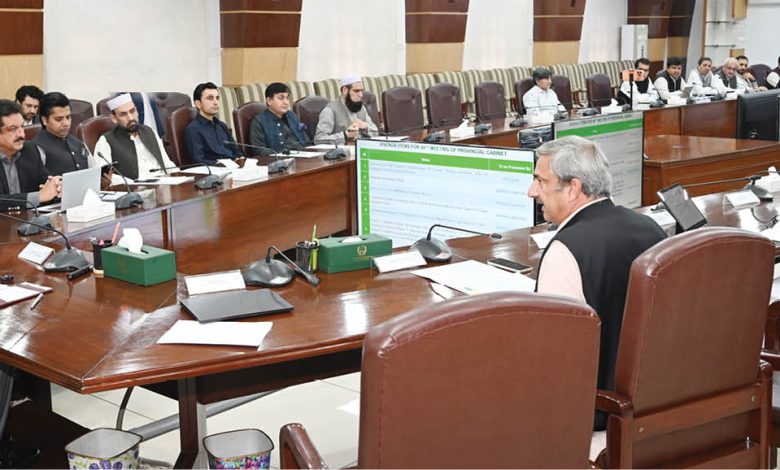
PESHAWAR: Khyber Pakhtunkhwa Chief Minister Muhammad Sohail Afridi has emphasized that the government must shield citizens from the impact of global economic and energy shocks by adopting practical measures, rather than passing the burden onto the public.
He made these remarks while addressing a meeting of the provincial cabinet on Monday.
The Chief Minister stressed that fiscal adjustment measures should begin with rationalizing government expenditures and reducing institutional privileges.
He said elected representatives, public institutions, and administrative departments must lead by example by cutting non-essential protocol and expenditures, ensuring that relief measures for citizens remain a priority.
Mr. Afridi observed that historically, economic pressures in Pakistan have often translated into hardship for ordinary citizens.
Public institutions, he said, must demonstrate accountability and responsible resource management before asking citizens to bear additional costs.
Referring to recent hikes in petroleum prices, the Chief Minister noted that measures with direct financial implications for the public must be carefully evaluated to protect vulnerable segments of society.
He recalled the federal government’s response during the COVID-19 pandemic under former Prime Minister Imran Khan, praising the targeted relief measures that supported vulnerable populations, small businesses, and the broader economy, earning international recognition for balancing public health with economic resilience.
Mr. Afridi also commended district administrations and elected representatives for the effective implementation of the Ehsaas Ramazan Dastarkhwan initiative, which continues to provide essential support during the holy month of Ramazan.
He directed the establishment of “Ehsaas Mazdoor Shelters” at divisional headquarters to provide daily wage laborers and job seekers with shaded waiting areas, clean drinking water, and basic amenities.
Briefing reporters after the cabinet meeting, Special Assistant to the Chief Minister on Information and Public Relations Shafi Jan said the cabinet approved a Fuel Conservation and Responsible Governance Initiative for a period of two months.
The initiative aims to reduce non-essential fuel consumption while safeguarding economic activity, Eid travel, and agricultural operations. Under the plan, government departments will maximize the use of digital platforms for official work, and provincial as well as district-level meetings will be conducted virtually where possible. E-office usage has been extended to Commissioners and Deputy Commissioners to strengthen paperless governance, while work-from-home arrangements of up to 50 percent will be introduced where feasible.
The cabinet also decided to reduce fuel entitlements for official vehicles by 25 percent, including administrative vehicles, with exemptions for police, law enforcement, rescue, and emergency services. VIP protocol convoys will be limited, and the use of official helicopters restricted to critical emergencies. Non-essential procurement, seminars, workshops, and official dinners will be minimized or shifted online. Educational institutions will remain closed on Fridays, and courts and universities will be encouraged to adopt virtual hearings and hybrid learning models. Measures to promote urban energy conservation, including restrictions on excessive lighting in commercial areas and wedding halls, will be implemented alongside traffic management strategies to reduce fuel wastage.
The government emphasized that these measures will not negatively impact vulnerable groups or key economic sectors, assuring relief for registered motorbike owners and monitoring diesel supply for wheat harvesting. Fuel hoarding and black marketing will be strictly dealt with to maintain market stability.
The cabinet also approved several development and social welfare schemes, including road improvements, underpasses, traffic management infrastructure, and monuments under the Peshawar Revitalization Plan, along with a non-ADP initiative to solarize 120,000 poor households in merged districts.
In the social welfare sector, Rs. 41.73 million has been allocated for winter clothing for students with disabilities, and Rs. 168.72 million for the Ramazan Dastarkhwan program, expanding benefits to over 1 million families.
A supplementary grant of Rs. 400 million was approved for the payment of 50 percent of outstanding liabilities in the current financial year, with the remainder planned for FY 2026–27.
Other approvals included clearing pending liabilities of a closed social media participatory scheme, amendments to the Debt Management Fund Rules, and the appointment of the CEO of the Khyber Pakhtunkhwa Economic Zones Development and Management Company. The meeting was attended by cabinet members, the Chief Secretary, additional chief secretaries, senior members of the board of revenue, and administrative secretaries.