PM announces 4-day work week, work from home
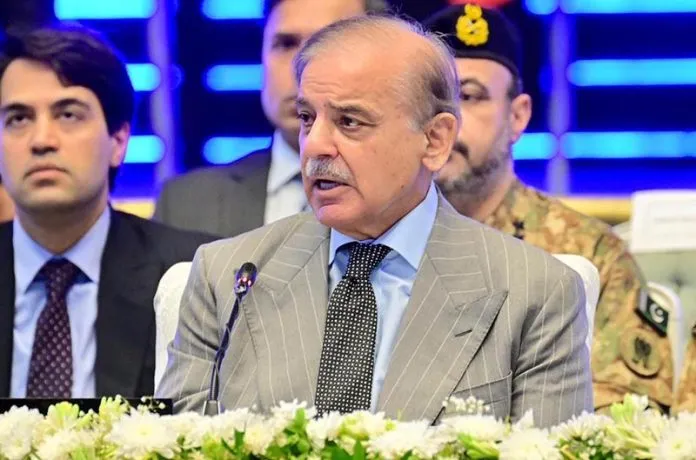
Says cabinet members will not take salaries, announces cuts in lawmakers’ salaries and fuel allowances
Islamabad
Prime Minister Shehbaz Sharif on Monday announced a four-day work week and work-from-home policy as part of wide-ranging austerity measures in light of the fuel crunch caused by the prevailing Middle East crisis following attacks by the United States and Israel on Iran.
Tensions in the Middle East surged last week after US and Israeli air strikes killed Iran’s Supreme Leader, Ayatollah Ali Khamenei, along with several senior officials, sparking retaliatory attacks from Tehran and broadening the regional conflict. In response, Iran targeted US military bases across multiple Gulf countries, significantly escalating the confrontation.
Iran has also closed the Strait of Hormuz following airstrikes by the US and Israel, halting the movement of oil supplies to many countries. As a result, crude oil prices on Friday recorded their strongest weekly gain since the extreme volatility during the COVID-19 pandemic in spring 2020, as shipping and energy exports through the key waterway were disrupted.
Addressing the nation, the prime minister announced a number of measures as part of an overall austerity plan to manage the current situation.
He said a meeting was held today in which both federal and provincial governments participated and several important decisions were made.
The prime minister said that gor the next two months, fuel allocated to government vehicles would be reduced by 50%, except for ambulances.
Further, over the next two months, 60% of vehicles used by government departments would be taken off the roads.
The prime minister said that members of the cabinet, including ministers, advisers and special assistants, would not draw salaries for two months while the salaries of members of parliament would be reduced by 25%.
“Expenditures of all government departments, apart from salaries, will be reduced by 20%,” he further said.
PM Shehbaz said that senior government officials in Grade 20 and above, earning more than Rs300,000 per month, would have two days’ salary deducted, which would be used to provide relief to the public.
He said the government has also imposed a complete ban on the purchase of vehicles, furniture, air conditioners and other equipment by government departments as part of cost-cutting measures.
In addition, the prime minister announced a complete ban on foreign visits by federal and provincial ministers, advisers, special assistants and other government officials, except for trips deemed “essential for national interest”. He added that the restriction would also apply to provincial governors.
The premier said the government would prioritise teleconferencing and online meetings to reduce official expenditures.
“Official dinners and Iftar parties funded by the government have also been banned,” he said, adding that seminars and conferences would now be held at government facilities instead of hotels to further curb spending.
To conserve fuel and energy, PM Shehbaz said the government would implement work-from-home arrangements across the public and private sectors for 50 per cent of employees, except for essential services.
The prime minister further said that offices would operate only four days a week, with an additional weekly holiday introduced to save fuel. This policy would not apply to banks.
He added that the industry and agriculture sectors would not be subject to work-from-home arrangements or the additional weekly holiday.
The prime minister also announced that all schools would be given two weeks of holidays starting at the end of the current week, while all higher education institutions would immediately shift to online classes.
“Unfortunately, the entire region is facing the threat of war, and the issue of peace is a matter of concern for all of us. Pakistan is making every effort to resolve the situation through diplomatic means.”
At the same time, he said Pakistan continued to face the threat of terrorism along its western borders. saying that the armed forces were carrying out operations to ensure the safety and security of the people in response to “attacks by terrorists and their facilitators in Afghanistan”.
He said the government had to increase oil prices in recent days, which he acknowledged was “undoubtedly a very difficult decision”. “I was advised to raise petrol prices much more than what was eventually announced, but I chose a middle path,” he added.
The prime minister said that Pakistan was once close to default, but “we set politics aside and made difficult decisions, in which the public strongly supported us. As a result, inflation has decreased, electricity prices have been reduced and the economy has now stabilised. All of this is the result of the prayers and hard work of the entire nation.”
He assured the nation that the government would place the least possible burden on the public in the present situation caused by the Mideast conflict.