US, Iran give ‘positive responses’ to mediation efforts: Qatar
GCC approves advanced unified military command headquarters in Kuwait, plans troop deployment
doha
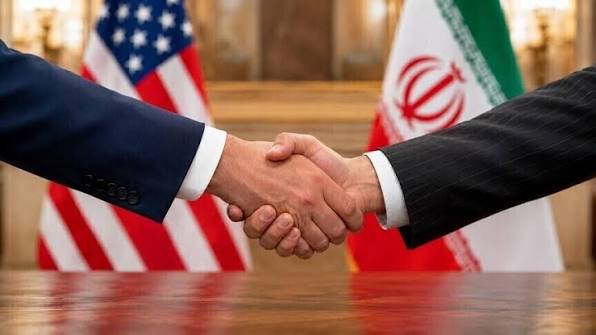
Qatar said on Tuesday that it had received “positive responses” from both the US and Iran regarding ongoing mediation efforts between the two sides, stressing that efforts continue to end the state of “no war, no peace” and uncertainty in the region.
“Mediation efforts between Washington and Tehran are still ongoing, and there have been positive responses from both sides,” Ibrahim Al-Hashimi, director of the Qatari Foreign Ministry’s Media and Communications Department, told a press conference in Doha.
He stressed that mediators were working to end the state of “no war, no peace” in the region and put an end to uncertainty.
His remarks came a day after Qatari Prime Minister Sheikh Mohammed bin Abdulrahman Al Thani said he held “positive discussions” with US President Donald Trump and Vice President JD Vance in Washington on reaching an agreement and bringing peace to the region.
“Pleased to meet with the US president and vice president in Washington, where we discussed the situation in the region and ways to make progress in US-Iran negotiations,” Sheikh Mohammed said on Monday on X.
“I appreciate the positive discussions on reaching an agreement and bringing peace to the region,” he added.
Earlier on Monday, an unnamed Iranian official told the semi-official Fars News Agency that reports of talks to reopen the Strait of Hormuz in exchange for the release of $8 billion in frozen Iranian assets were false.
The official said Tehran would engage only within the framework of seven conditions it had conveyed to Washington. They include lifting the naval blockade and unilateral sanctions, ensuring safe passage through the strait, releasing frozen Iranian assets, and ending the war.
GCC approves advanced unified military command headquarters in Kuwait, plans troop deployment: report
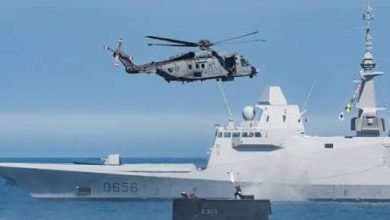
Gulf Cooperation Council (GCC) member states have approved establishing an advanced headquarters for their unified military command in Kuwait and deploying “appropriate” forces there, the bloc’s secretary-general said, according to Saudi state television Al Ekhbariya.
No further details on the command or the forces to be deployed were immediately available.
The announcement followed the 23rd meeting of the GCC’s Joint Defence Council, attended by defence ministers from the bloc’s member states in Bahrain.
The GCC established its Unified Military Command at a summit in Kuwait in December 2013 to plan and manage joint military operations and strengthen member states’ defence capabilities against potential threats to their territory, airspace, waters and interests.
The Gulf Arab states, most of which host huge US military bases, have faced repeated Iranian missile and drone attacks since the United States and Israel launched their war on Iran on February 28.
The war has disrupted air travel and shipping, and raised concerns over the security of the region’s vital oil and gas exports.
Araghchi says Iran war can only end through diplomacy, not military action or sanctions
Iranian Foreign Minister Abbas Araghchi on Tuesday said that the Iran war would only come to an end by using respect and diplomacy, and while meeting Iran’s demands.
He dismissed media reports about a possible meeting between Iran’s top security official and the US vice president, describing them as baseless, according to IRNA.
“The war on Iran will end neither through military action nor through increased sanctions. The only way forward is to use the language of respect and diplomacy, while meeting Iran’s demands and the conditions set out in the two-day proposal that remains on the table,” he added.