US, Israel ‘confirm’ death of Iranian IRGC naval commander
Trump says the US needs nothing from NATO, but ‘never forget’ this very important point in time
Washington
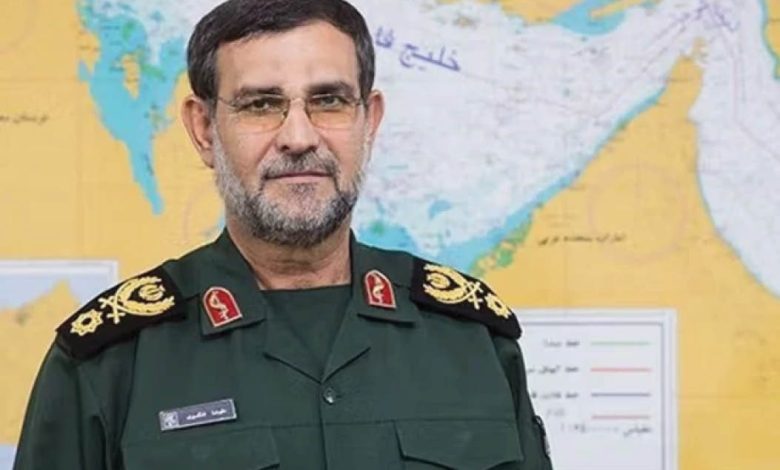
The United States and Israel on Thursday confirmed the death of Iranian Islamic Revolutionary Guard Corps–Navy commander Admiral Alireza Tangsiri in an airstrike.
“The death of the Iranian Islamic Revolutionary Guards Corps–Navy (IRGC-N) commander, Admiral Alireza Tangsiri, from an Israeli airstrike makes the region safer,” said a statement on X from US Central Command.
The statement further added that “Tangsiri had commanded the IRGC-N for eight years, during which time the IRGC harassed thousands of innocent merchant mariners, attacked hundreds of vessels with one-way attack drones and missiles, and killed countless innocent civilians.”
“He was designated as a Specially Designated Global Terrorist by the US Treasury in June 2019, with additional secondary sanctions added in 2024 related to drone development,” the statement continued.
US Centcom further stated that, since the commencement of Operation Epic Fury, 92% of the large ships in the Iranian Navy had been eliminated. “As a result, the IRGC-N had completely lost its ability to project power in the Middle East or around the world. Now, with the loss of their long-time leader, the IRGC-N was on an irreversible decline.”
“US military strikes on the IRGC-N will continue. Therefore, we call on every Iranian serving in the IRGC-N to immediately abandon their post and return home to avoid further risk of unnecessary injury or death,” the statement concluded.
President Benjamin Netanyahu also confirmed in a post on X that Israel had eliminated Tangsiri last night.
He described him as a man with “a lot of blood on his hands” and noted that he was also responsible for leading the closure of the Strait of Hormuz.
Pentagon getting ready for huge ‘final blow’ in Iran war: report
The Pentagon prepared military options for a “final blow” in the Iran war, involving the use of ground forces and massive bombing, according to a report by Axios, citing two US officials and two sources with knowledge of the matter.
According to the report, a “dramatic military escalation” had been expected if there was no progress in talks between Tehran and Washington.
The sources said that options such as invading the strategically important islands of Kharg, Larak, Abu Musa, and others, along with a blockade of ships carrying Iranian oil east of the Strait of Hormuz, were on the table.
The report stated that some US officials believed that a “show of overwhelming force” to end the conflicts would give the US greater leverage in negotiations.
A source familiar with the negotiation efforts had noted that Türkiye, Pakistan, and Egypt were continuing their attempts to organise talks between the parties.
The source added that Iran had rejected the US’s initial demands but had not completely withdrawn from the negotiations.
Despite the sources’ statement, US President Donald Trump had reportedly not reached a decision yet on any of these scenarios.
Any potential ground operations were seen as “hypothetical” by White House officials.
Pakistan relaying messages in US-Iran indirect talks, foreign minister says
Foreign Minister Ishaq Dar said that indirect communication between the United States and Iran is underway through messages being relayed by Pakistan, with Türkiye and Egypt also assisting diplomatic efforts aimed at easing tensions in the Middle East.
In a post on X, the Dar said media speculation about formal peace negotiations was misplaced, clarifying that the current engagement involved indirect exchanges rather than direct talks.
“There has been unnecessary speculation in the media regarding peace talks to end ongoing conflict in the Middle East. In reality, US-Iran indirect talks are taking place through messages being relayed by Pakistan,” he wrote.