Mian Zahid calls for essential economic reforms to align with Pakistan’s military deterrence capabilities on the anniversary of May 28th
KARACHI
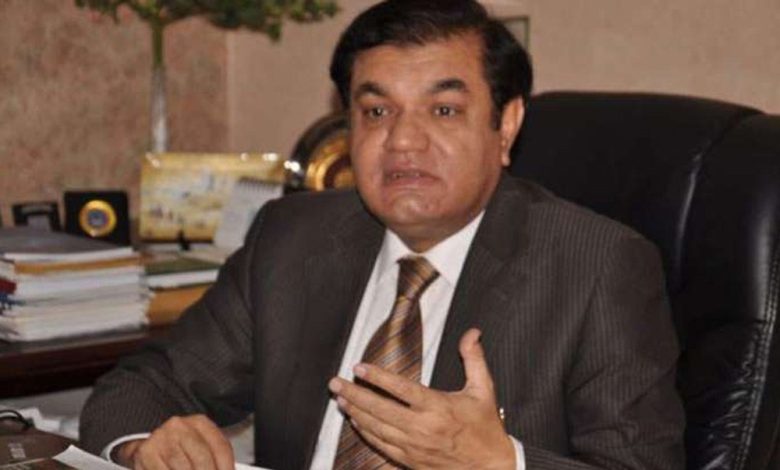
Mian Zahid Hussain, President Pakistan Businessmen and Intellectuals Forum & All Karachi Industrial Alliance, Chairman National Business Group Pakistan, Chairman Policy Advisory Board FPCCI and Former Provincial Minister Information Technology, stated that May 28, 1998, remains a historic and unforgettable day in Pakistan’s history when the country conducted nuclear tests and permanently established the balance of power in the region.
He added that under the leadership of Prime Minister Mian Nawaz Sharif, Pakistan conducted six nuclear tests in Chagai in response to India, not only neutralizing immediate defense threats but also elevating Pakistan to the status of the first and only nuclear power in the Muslim world.
Mian Zahid Hussain said that the foundation of Pakistan’s nuclear program was laid by Prime Minister Zulfikar Ali Bhutto and Dr. Abdul Qadeer Khan, and it was later carried forward and brought to completion by successive governments, including those of General Zia-ul-Haq, Mohtarma Benazir Bhutto, Mian Nawaz Sharif, General Pervez Musharraf, and President Asif Ali Zardari.
He noted that this unprecedented achievement is a shining example of the dedication of our scientists, national institutions, and collective national unity, which made Pakistan’s security invincible despite severe international pressure and sanctions.
He further stated that Pakistan’s missile program has also achieved remarkable success, strengthening the country’s strategic defense capabilities. Over the last three decades, Pakistan’s strong defense capacity has protected the country from external aggression and made it clear to the world that there can be no compromise on Pakistan’s sovereignty.
Mian Zahid Hussain highlighted that after achieving nuclear capability and strengthening its missile program, Pakistan once again demonstrated its military strength last year on May 10 under the leadership of Prime Minister Shehbaz Sharif and Field Marshal Syed Asim Munir.
He stated that Pakistan not only successfully defeated the attack of an enemy ten times larger in size but also gave a strong and effective response, while achieving important successes on the diplomatic front as well. He said that Pakistan has always sought to promote peace in the region, global strategic stability, and strong mutual relations with different countries.
He added that major projects such as the China-Pakistan Economic Corridor (CPEC) have paved the way for Pakistan to emerge as an international trade and transit hub, while continued engagement with global financial institutions and friendly countries has strengthened Pakistan’s diplomatic position even during difficult economic conditions.
Mian Zahid Hussain further stated that during the recent Iran-America conflict, Pakistan, under the leadership of Prime Minister Shehbaz Sharif, Field Marshal Syed Asim Munir, and Deputy Prime Minister Ishaq Dar, demonstrated exceptional diplomacy for the achievement of sustainable peace in the region, which is being appreciated across the world.
He emphasized that the time has now come to transform Pakistan’s defense strength and diplomatic achievements into complete economic stability, as true national security is impossible without financial self-reliance.
Reflecting on the economic landscape, Mian Zahid Hussain expressed deep concern that despite being a nuclear power, Pakistan continues to face fiscal imbalances and economic weaknesses.
While current macroeconomic stabilization efforts have shown some progress—pushing foreign exchange reserves to $22.58 billion, keeping GDP growth around 3.7 percent, and bringing the central bank’s policy rate down from 22 percent to 11.5 percent—the foundation of the economy remains fragile.
He pointed out that due to a revenue collection shortfall of Rs800 billion, the fiscal deficit is feared to reach nearly 5.8 percent of GDP, while the public debt-to-GDP ratio continues to fluctuate between 70 and 80 percent. He added that debt servicing consumes almost two-thirds of the government’s total revenues, leaving negligible fiscal space for development projects.
Outlining the way forward, Mian Zahid Hussain urged the government to adopt strict fiscal discipline in the upcoming federal budget, expand the tax net to undocumented sectors, and reduce the burden on existing taxpayers and industries.
He said that the focus of national policy must shift toward structural reforms, digitalization of the economy, improvement of the energy sector, and the creation of a favorable environment for foreign investment.
He concluded that the same spirit, national unity, and strong political will demonstrated on May 28, 1998, and May 10, 2025, must now be directed toward economic revival and national development so that Pakistan’s economic strength can become as invincible as its defense capability.