Delays in public service delivery to be treated as serious offence: KP CM
PESHAWAR
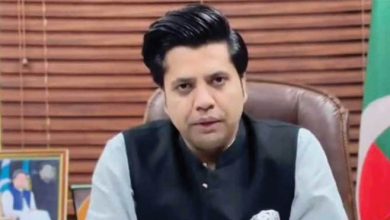
Khyber Pakhtunkhwa Chief Minister Muhammad Sohail Afridi has warned that any delays in public service delivery will be treated as a serious administrative offence under applicable rules.
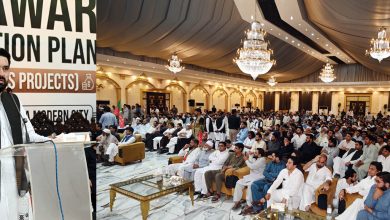
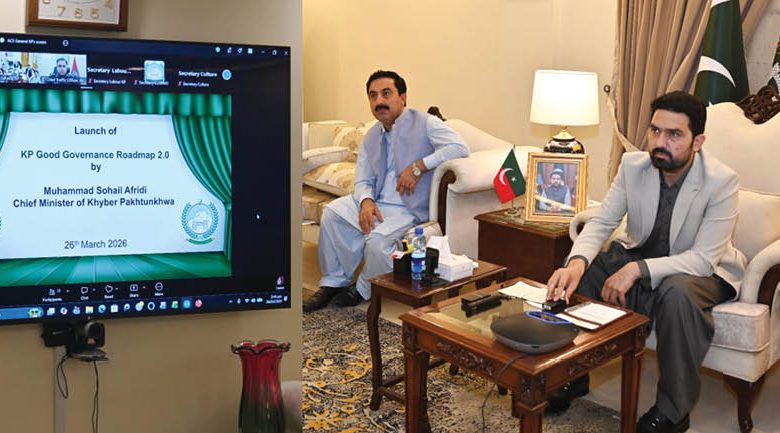
Addressing the launch of the Good Governance Roadmap 2.0, he emphasized strict accountability and monitoring to ensure timely, transparent, and citizen-centric services across the province.
The Chief Minister expanded the province’s reform agenda with 10 additional departments and 88 new initiatives, bringing the total number of interventions to 450.
He emphasized that the roadmap was being monitored at the highest level, warning that delays in public service delivery will be treated as a serious administrative offence under applicable rules. He directed relevant authorities to ensure a safe, welcoming, and facilitative environment for tourists ahead of the upcoming season, stressing the need for immediate facelifts at tourist destinations and accelerated improvements in infrastructure and services.
Among key directives, the Chief Minister called for the priority completion of the PC-1 for Nathia Gali Road, the early initiation of the Circular Railway project, and preliminary work for railway expansion to District Khyber and Mardan before the next budget. He also highlighted plans to introduce an e-challan system to facilitate vehicle ownership transfers, alongside public awareness campaigns to ensure citizens benefit from government reforms.
Commending the Forest Department for planting one million trees on March 23, the Chief Minister stressed the need for sapling protection and reiterated the government’s focus on climate change mitigation and expanding forest cover.
The Good Governance Roadmap 2.0 aims to deliver measurable improvements in governance, transparency, and public service delivery across sectors. Key initiatives include mobile land record services for citizens, integration with NADRA for transparent transactions, a camera-based traffic enforcement system, school zone safety measures, smog monitoring systems, climate observatories, and the expansion of the Billion Tree Plus Programme.
In transport, driving license digitization, intra-city transport under a public-private partnership, and improved inter-district connectivity were planned.
In health, 150 of 250 Basic Health Units now operate 24 hours, with full coverage expected by June 2026. Polio campaigns have expanded, immunization coverage has increased by 24 percent, and 700 doctors have been recruited. Municipal services include cleaning 2,500 kilometers of drains and sewerage lines and a rural waste collection system handling 4,500 tons of waste monthly.
In education, over 100,000 students received furniture, 3,500 scholarships were awarded, and teacher attendance has risen to 91 percent following disciplinary measures against 16,000 teachers. Agriculture reforms include converting 150,000 wild olive trees into productive varieties and cement lining over 700 watercourses. Social welfare initiatives include revamping 20 special education institutes, recruiting specialized teachers and therapists, providing stipends to over 6,400 orphans and widows, and distributing assistive devices to persons with disabilities.
IT reforms have digitized over 100 government services, implemented cashless payments, and launched the Dastak App, giving citizens access to more than 60 public services. In tourism, waste management in Galiyat areas has been outsourced, land use and master planning for key destinations are underway, interest-free loans have been disbursed to promote community-based accommodation, and the new Peshawar General Bus Stand is expected to be operational by June 2026.