UoP students briefed on modern surveillance, smart policing
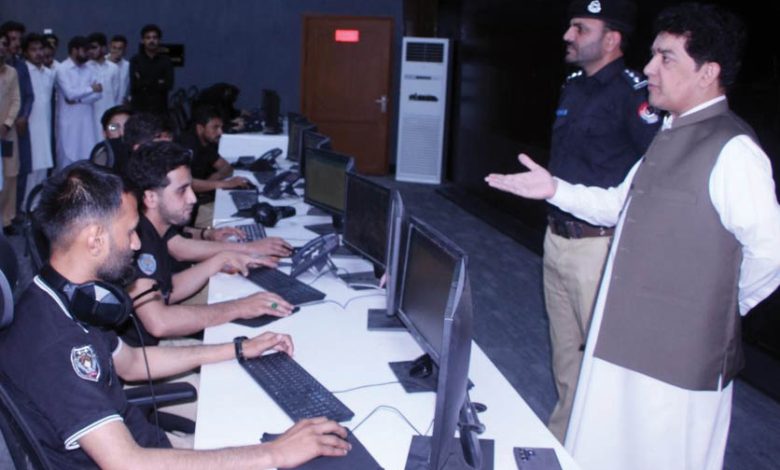
A delegation of students from the Department of Criminology, University of Peshawar, visited Safe City Peshawar where they were given a detailed briefing on modern policing, digital surveillance systems, and advanced technologies being used for public safety.
Deputy Director Safe City Khyber Pakhtunkhwa Naveed Gul briefed the delegation, while DSP Operations Safe City Project Wajid Shah was also present on the occasion.
Speaking to the delegation, Deputy Director Naveed Gul said that, in line with the vision of Inspector General of Police Khyber Pakhtunkhwa Zulfiqar Hameed, Safe City projects are being implemented in multiple cities across the province as part of efforts to promote modern, smart, and technology-driven policing.
He said the system aims to ensure the protection of life and property, prevention of crime, counter-terrorism support, and swift response to public emergencies through a technology-driven policing model aligned with modern requirements.
He added that the entire city is monitored round the clock through a central command and control system. Using high-resolution cameras, facial recognition technology, automatic number plate recognition, thermal imaging, and intelligent video analytics, authorities are able to identify suspicious activity and track wanted individuals in a timely manner.
He further stated that the Safe City project is playing a significant role in reducing terrorism, street crime, and other serious offences by enhancing surveillance of sensitive locations, public spaces, and key installations, thereby improving the operational efficiency of law enforcement agencies.
Naveed Gul also said that Safe City projects are being expanded to Dera Ismail Khan, Bannu, and Lakki Marwat, which are expected to further strengthen law and order in southern districts and support counter-terrorism and crime-control operations.
During the visit, the delegation was given a practical demonstration of the command and control center, surveillance systems, body-worn cameras, digital monitoring platforms, and an intelligent response mechanism, including the panic alert system. Students were informed that body-worn cameras are helping improve transparency, accountability, and professional standards in policing.
A detailed briefing was also given on the panic button system, under which emergency alerts from designated points in the city enable rapid response to assist women, senior citizens, and the general public. Officials cited a recent incident in which timely response to a panic alert helped rescue efforts during a house fire, reducing potential loss of life and property. The network is now being expanded to additional areas of the city.
The delegation was also informed about the integration of Safe City systems with the Excise and Taxation Department, enabling vehicle verification, identification of suspicious and unregistered vehicles, and improved inter-agency coordination.
Officials added that the modern surveillance network also assists in traffic rule enforcement, accident monitoring, and urban traffic management, while significantly enhancing transparency, efficiency, and public trust in policing.
A question-and-answer session was also held, during which students discussed topics including modern policing, crime prevention, artificial intelligence-based surveillance, digital forensics, and future Safe City initiatives, and shared suggestions regarding the panic alert system.