Tashkent’s water diplomacy gains momentum ahead of IFAS Summit
The upcoming summit of the International Fund for Saving the Aral Sea (IFAS) is set to take place in Astana, marking a pivotal moment in Central Asia’s water diplomacy as Uzbekistan prepares to assume the organization’s chairmanship for 2027–2029.
This will be Uzbekistan’s third term leading IFAS, following earlier mandates in 1997–1999 and 2013–2016. The renewed leadership comes at a time when the regional water landscape has undergone significant transformation, positioning Tashkent as both a pioneer and a key driver of water management reforms.
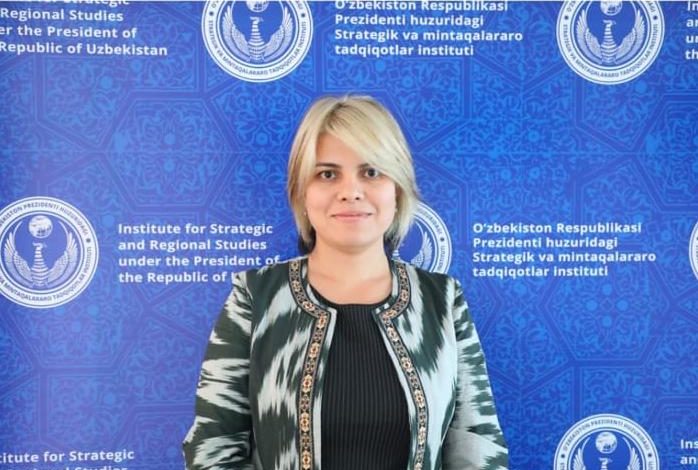
According to Lobar Umarova, Senior Research Fellow at the Institute for Strategic and Regional Studies under the President of Uzbekistan, the country has implemented wide-ranging reforms to address mounting water challenges caused by climate change, population growth, and economic expansion.
Over the past 15 years, Uzbekistan’s per capita water availability has dropped sharply from 3,000 to 1,400 cubic meters annually. Total water resources have declined by 21 percent since 1991, while nearly 80 percent of surface water originates outside the country, underscoring its dependence on transboundary flows.
Under President Shavkat Mirziyoyev, Uzbekistan has prioritized water sector modernization. The adoption of water-saving technologies has expanded dramatically from 28,000 hectares to over 2.6 million hectares, now covering more than 60% of irrigated land. By 2030, these efforts are expected to save up to 15 billion cubic meters of water annually.
Digital transformation has also become central to reforms. Eleven information systems are being introduced to monitor water resources, while over 100 major facilities have been automated. The “Smart Water” system is now operational at thousands of intake points, alongside real-time monitoring at pumping stations.
Parallel economic adjustments have reduced agriculture’s share in Aral Seafrom 32% in 2017 to 19% in 2024, even as agricultural output has grown by 17%, reflecting improved efficiency.
On the regional front, Uzbekistan has played a leading role in strengthening cooperation through IFAS. Key initiatives include ecological restoration projects in the Aral Sea region, where artificial water bodies and extensive afforestation programs have helped mitigate environmental degradation. To date, green cover has expanded across nearly 2 million hectares.
International recognition of these efforts came through a resolution adopted by the United Nations General Assembly, designating the Aral Sea region as a “Zone of Ecological Innovations and Technologies.”
Uzbekistan has also advanced multilateral agreements on shared water resources, including cooperation with Kazakhstan, Kyrgyzstan, and Tajikistan on major reservoirs and hydropower projects. At the same time, Tashkent is advocating dialogue with Afghanistan to ensure balanced and sustainable use of transboundary rivers.
Looking ahead, Uzbekistan has proposed declaring 2026–2036 as a “Decade of Practical Actions for the Rational Use of Water in Central Asia” and plans to establish a regional water management training center.
As it prepares to lead IFAS once again, Uzbekistan aims to strengthen institutional frameworks, enhance environmental protection, and promote sustainable water use across Central Asia, positioning water diplomacy as a cornerstone of regional stability and development.