Population, climate biggest challenges: Aurangzeb
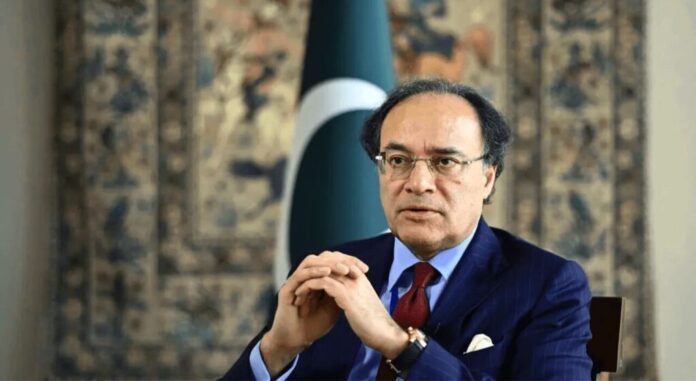
Federal Minister for Finance and Revenue, Senator Muhammad Aurangzeb, on Wednesday, warned that Pakistan’s future potential could be severely undermined unless the country addresses rapid population growth and climate change, describing both as existential challenges that require sustained policy reforms, institutional coordination and long-term financing.
Addressing the World Population Day 2026 commemorative conference, Aurangzeb said the government’s efforts had evolved from the National Population Stabilisation Plan to the National Population Council, bringing together civil and military leadership, provincial governments and the federation to ensure effective implementation.
“We have known the ‘what’ and the ‘why’ for the longest time. The real question has always been the ‘how’ and the ‘who’,” he said, adding that the council would help deliver results through clear targets, Key Performance Indicators (KPIs) and regular performance reviews.
“You can only deliver what you can measure,” Aurangzeb said, assuring the Health Ministry of the Finance Ministry’s continued support.
He said governments often prepare budgets with short-term priorities in mind, but population growth and climate change demand long-term planning. “If we do not address these two existential issues, then by the time Pakistan completes 100 years in 2047, we are not going to achieve our true potential,” he warned.
Highlighting recent measures, Aurangzeb said the government had removed the sales tax on contraceptives in the federal budget, calling it an important tactical intervention that would improve affordability and produce positive results even in the short term.
He, however, stressed that structural reforms were equally important, particularly the National Finance Commission (NFC) Award formula, where population currently accounts for about 82 percent of resource distribution among provinces.
Calling the existing formula “not sustainable,” he said the population weight in future NFC discussions would have to be reviewed.
On financing, Aurangzeb said budgetary resources alone would not be sufficient. He revealed that the World Bank’s 10-year Country Partnership Framework, signed last year, includes population as one of its three pillars, with a focus on reducing learning poverty—particularly girls out of school—and tackling child stunting.
He said around $600 million to $700 million annually would be available under the framework to finance population-related interventions.
The minister also lauded the nationwide birth-spacing (Waqfa) awareness campaign, describing it as “absolutely brilliant,” and highlighted the media’s role in changing public attitudes. Referring to a recent visit to Karachi, he said he had visited a girls’ school supported by Shehzad Roy’s Zindagi Trust, underscoring the importance of girls’ education.
Drawing lessons from Bangladesh, Iran and Indonesia, Aurangzeb said all three countries reduced their population growth rates to around one percent over 10 to 15 years by focusing on girls’ education, increasing women’s participation in the workforce and securing the support of religious scholars.