Muttahida Madaris Council Pakistan meeting agrees on integrated madrassa system
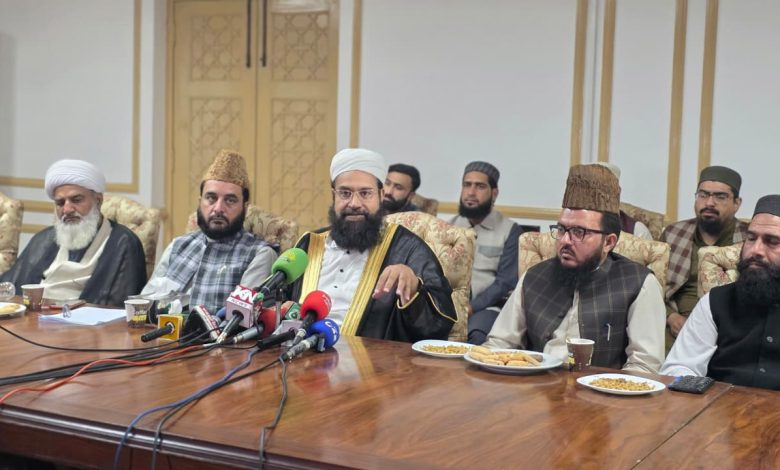
An important meeting of Muttahida Madaris Council Pakistan was held with the participation of leaders of various religious education organisations and federations from across the country, focusing on the educational, administrative and social role of religious seminaries, challenges facing madrassas, promotion of modern sciences, religious and contemporary education for female students, and the development of an integrated, organised and effective educational system for religious seminaries nationwide.
The meeting was attended by Hafiz Muhammad Tahir Mehmood Ashrafi, President, Wafaq-ul-Madaris wal Jamiaat-ud-Dinia Pakistan; Allama Dr. Mehr Asif Akbar, Nazim-e-Aala, Nizam-ul-Madaris Pakistan; Maulana Muhammad Zubair Faheem, Central President, Ittehad-ul-Madaris Al-Arabia Pakistan; Muhammad Tauqir Abbas, Vice President, Majma-ul-Madaris Taleem-ul-Kitab wal Academy; Nasir Mehdi Karbalai, Nazim-e-Aala, Majma-ul-Madaris Taleem-ul-Kitab wal Academy; Mufti Sheikh Abdul Latif, President, Board of Islamic Education; Hafiz Nadeem Shams, Controller of Examinations, Board of Islamic Education; Maulana Muhammad Ismail, Deputy Secretary General, Kanz-ul-Madaris Pakistan; Maulana Adil Attari, Nazim-e-Aala, Kanz-ul-Madaris Pakistan; Dr. Mufti Muhammad Kareem Khan, Chairman, Wafaq-ul-Madaris Al-Islamia Al-Rizvia Pakistan; Syed Wajid Ali Gillani, President, Punjab Wafaq-ul-Madaris Al-Islamia Al-Rizvia Pakistan; Mufti Hafiz Ikramullah Wahidi, Controller of Examinations, Ittehad-ul-Madaris Al-Islamia Pakistan; Maulana Hafiz Ataullah Atiq, Nazim-e-Aala, Punjab Ittehad-ul-Madaris Al-Islamia Pakistan; Maulana Fareed Ahmed Haqqani, President, Wahdat-ul-Madaris Al-Islamia Punjab; Maulana Sajid Fareed Haqqani and other religious and academic personalities, said a press release.
Participants expressed their resolve to continue joint efforts to preserve the historical identity, scholarly traditions and religious services of seminaries while aligning them with the educational requirements of the modern era.
The meeting emphasised that religious seminaries have played a fundamental role for centuries in promoting the teachings of the Holy Quran and Sunnah, Islamic sciences, moral education, character building and social reform. These institutions have rendered significant services in preserving religious awareness, scholarly traditions and moral values in society, which need to be further strengthened and enhanced.
Particular attention was given to the importance of promoting modern sciences, science and technology, and other contemporary subjects alongside religious education. Participants stressed that madrassa students should be equipped not only with expertise in religious sciences but also with modern intellectual, academic and practical knowledge so that they can play an effective role in national development and progress.
Detailed discussions were also held on female education, highlighting the importance of expanding opportunities for women to acquire both religious and contemporary education, improving quality educational facilities and providing a conducive academic and training environment. Female education was described as fundamental to the positive development of families and society.
The meeting also agreed on strengthening mutual cooperation, academic linkages and a joint strategy among different madrassa federations and organisations across the country.
Participants stressed the need for better coordination in the educational systems, examinations, certifications, registration and administrative affairs of seminaries to improve their academic standards and create wider educational and professional development opportunities for male and female students.
The meeting appreciated the efforts of Prime Minister Muhammad Shehbaz Sharif, Chief of Army Staff and Chief of Defence Forces Field Marshal Syed Asim Munir, and Chief Minister Punjab Maryam Nawaz Sharif regarding madrassa registration, access to banking facilities and the resolution of other administrative issues. Participants expressed hope that these processes would be further simplified and made more effective, enabling religious seminaries to continue their educational and religious activities more efficiently.
The meeting also appreciated the efforts of the National Paigham-e-Aman Committee in promoting coordination, mutual trust and effective consultation between religious seminaries and the government.
Participants observed that the Committee’s initiatives were helping strengthen communication and constructive dialogue between madrassas and government institutions, marking an important step towards resolving the issues faced by religious seminaries, improving the education system and promoting the integration of religious and contemporary education.
The meeting also discussed the prevailing national situation, law and order, unity among Muslims, interfaith harmony and the promotion of religious tolerance.
Participants agreed that religious scholars, seminaries and religious organisations would continue playing their role in promoting peace, tolerance, brotherhood and national cohesion. Unity and mutual respect among all schools of thought were described as essential for Pakistan’s security, stability and progress.
The meeting reaffirmed that Muttahida Madaris Council Pakistan would continue its collective role in resolving common challenges facing religious seminaries across the country, improving educational standards, promoting religious and contemporary education, expanding educational opportunities for female students and strengthening unity among Muslims.
Participants agreed that a strong, quality and modernised educational system for religious seminaries was essential not only for preserving the country’s religious and scholarly heritage but also for building a brighter, peaceful and stable future for Pakistan.