Iranian president says US deal ‘not out of reach’
Iranian official says ‘illegal routes’ in Strait of Hormuz to soon be blocked
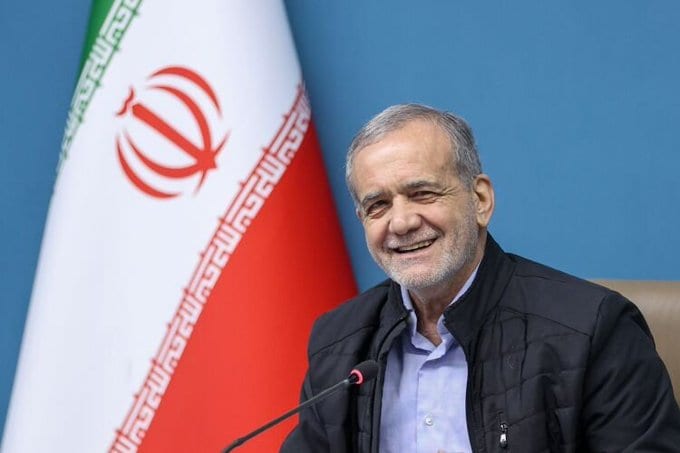
Iranian President Masoud Pezeshkian said during a call with his Russian counterpart, Vladimir Putin, that reaching an agreement with the United States was “not out of reach” if Washington adhered to international legal frameworks, according to the Iranian presidency.
The two leaders discussed regional developments, Iran-US negotiations and relations, according to a statement.
Pezeshkian briefed Putin on negotiations between Iran and the US mediated by Pakistan, describing Washington’s “double standards and maximalism” as the biggest obstacle to reaching a fair agreement.
He said Tehran was prepared to reach a “balanced and fair” agreement that would ensure lasting peace and security in the region.
“Our red line is Iran’s national interests and the rights of the Iranian people,” said Pezeshkian, adding that if Washington adhered to international legal frameworks, reaching an agreement would not be out of reach.
The Iranian president also described Gulf countries as Iran’s “brothers” and expressed regret about the use of US military bases in those countries for attacks against Iran.
He said Tehran was ready to cooperate with neighbouring countries to achieve regional peace and security without the presence or involvement of powers from outside the region.
Putin reiterated Russia’s support for diplomatic efforts to reach a political settlement to the war and said Moscow was ready to keep helping find a diplomatic solution, according to the statement.
He also stressed the need to respect Iran’s sovereignty and territorial integrity, and backed Tehran’s demands for compensation for damage caused during the war and long-term security guarantees against additional attacks.
The two leaders reaffirmed their commitment to expanding cooperation under the Comprehensive Strategic Partnership Treaty and maintaining close coordination in international forums.
Iranian official says ‘illegal routes’ in Strait of Hormuz to soon be blocked
Transit routes in the Strait of Hormuz deemed illegal by Iran will soon be closed, an adviser to the Revolutionary Guards’ Commander told the semi-official Fars News Agency on Wednesday, referring to the southern pathway hugging Oman’s coast.
Mohammadreza Naqdi said these “few routes” had been created by blasting and damaging some of the rocky passages in the strategic waterway and were used by “small boats smuggling oil and transferring it to tankers”, challenging the narrative that Gulf oil exports are regaining pre-war levels.
“The Strait of Hormuz is closed, and the armed forces of the Islamic Republic of Iran have full control over it. This situation will continue until Iran’s legitimate demands are met,” he added.
A seven-day moving average for crude exports from the region was 18.3 million barrels per day on September 30, provisional data from Kpler showed, with volumes topping pre-war levels on 14 days in September.
That included Gulf oil sent via Hormuz, the Red Sea, and from terminals and ship-to-ship transfers in the Gulf of Oman.
The IRGC has consistently denied that seaborne crude flows in the strait are rebounding thanks to US Navy help, with another IRGC adviser, Majid Mirahmadi, saying on Thursday that a daily average of 10 ships transit the waterway against an average of 125 before the war, which started on February 28, when the US and Israel killed Supreme Leader Ayatollah Ali Khamenei in a Tehran airstrike.
Despite growing oil flows in September, Iranian attacks on tankers and logistical constraints have persisted and call into question whether higher flows can be sustained durably.
Iran will never give up its right to enrich uranium: senior Iranian official
Earlier, a senior Iranian official told Reuters that Iran would never give up its right to enrich, but details could be discussed later, adding that US ideas about Iran’s nuclear programme were at odds with Iran’s demands.
The official’s comments came in response to earlier comments made by US Secretary of State Marco Rubio and US Vice President JD Vance.
The official said Vance’s comments on Iran’s nuclear programme were the Americans’ “ideas and requests”.
There have been no negotiations between Iran and the US about Tehran’s nuclear programme, the official said, adding that the US must first meet Tehran’s conditions before the nuclear issue can be discussed.
US’ recognition of Iran’s right to enrichment is Tehran’s red line, the official said.
Iran has failed to reach agreement with US on nuclear programme: Rubio
US Secretary of State Marco Rubio said on Wednesday that Iran has “failed to take advantage of multiple opportunities” to reach an agreement with the United States on its nuclear programme.
He made the comments during his trip to Greece in a meeting with the Greek foreign minister.
He also said that Iran has “lost complete control” of the Strait of Hormuz, US Secretary of State Marco Rubio said Wednesday, adding that Tehran’s economy was “in total and complete freefall,” AFP reported.
“There’s almost as much oil flowing out now as there was before this conflict began. So they’ve lost complete control of the Straits,” Rubio said.
Earlier, US Vice President JD Vance said in an exclusive interview with Reuters that Iran must make a “meaningful” reduction in its nuclear enrichment capacity to satisfy US demands and end the countries’ seven-month war, even as Washington was unsure how Tehran makes decisions in negotiations.
Vance has taken a leading role in negotiating a settlement to the conflict and brokered a provisional peace agreement in June that quickly fell apart. The war has jolted global energy markets and become a political liability for President Donald Trump and fellow Republicans ahead of November midterm elections.
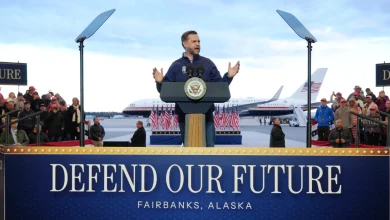
Speaking on Monday after a campaign trip in Alaska, Vance said any agreement would require Iran to reduce its nuclear enrichment capacity, rather than offer assurances of future nuclear drawdowns.
“If you don’t want a nuclear weapon, then why do you need 60% enriched fuel? And if you want to show commitment to not building a nuclear weapon, don’t build highly enriched fuel. That’s a very basic threshold issue,” Vance said.