Zong reaffirms climate action commitment at Breathe Pakistan Conference 2026
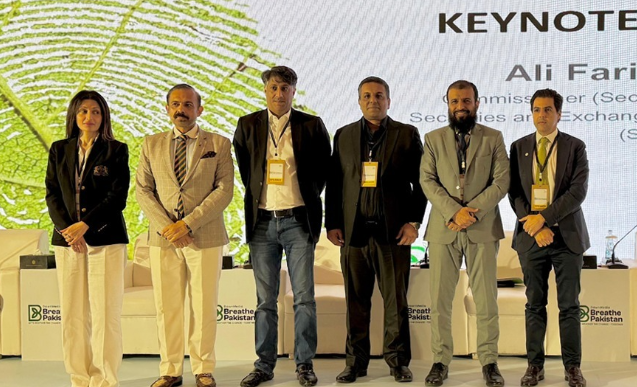
Zong, Pakistan’s leading technology service enterprise, has partnered with the Breathe Pakistan International Climate Change Conference 2026, bringing together policymakers, corporate leaders, development institutions, and climate experts to address Pakistan’s escalating climate challenges.
As climate pressures intensify across the country — from recurrent floods and extreme heatwaves to worsening air quality, water scarcity, and food insecurity — the need to transition from awareness to coordinated, large-scale action has become increasingly critical.
Despite contributing minimally to global emissions, Pakistan remains among the world’s most climate-vulnerable nations, underscoring the need for locally grounded yet globally aligned climate strategies.
At Zong, climate action is viewed not only as an environmental responsibility but also as a strategic imperative that drives operational efficiency, strengthens governance, and enables long-term resilience.
Through its partnership with this national platform, Zong has reaffirmed its commitment to advancing Pakistan’s climate agenda through cross-sector collaboration. The company believes that next-generation technologies must be anchored in environmental stewardship and takes pride in leading the transition toward green and low-carbon operations.
The conference brought together key stakeholders to examine the intersection of climate risk, economic stability, and national development. A key highlight of the summit was the panel discussion titled, “From CSR to Climate Leadership: Mobilising Pakistan’s Private Sector for Climate Action.” The session featured Najeeb Ullah Khan, Deputy Director Network Operations at Zong, alongside other prominent voices from various industries. Najeeb emphasized the critical role of public-private partnerships in advancing climate resilience.
Addressing the panel, Najeeb Ullah Khan said, “Climate action is a core business priority for us. As a critical communications and technology service enterprise, our focus is on building resilient, energy-efficient infrastructure capable of withstanding increasing climate pressures while ensuring continuity of services when it matters most. Through investments in renewable energy, intelligent network systems, and operational resilience, we are reducing our environmental footprint while strengthening our ability to support communities, institutions, and emergency response efforts. Platforms like Breathe Pakistan play a vital role in aligning public and private sector efforts toward scalable, long-term climate solutions.”
Zong’s commitment to resilience is embedded within its infrastructure strategy. To date, 85 percent of its network sites have been transitioned to solar and lithium-ion energy solutions, generating 1.43 million kWh of clean energy annually. The shift toward energy diversification and intelligent monitoring has proven critical during climate-induced disruptions, enabling uninterrupted connectivity during floods in Sindh and Balochistan.
By ensuring reliable communication for emergency responders and affected communities, Zong has solidified its role as a key partner in national crisis management.
Beyond infrastructure, Zong continues to contribute to environmental restoration and operational sustainability. In collaboration with the Ministry of Climate Change and Pak-EPA, the company has planted 3,500 indigenous trees in Islamabad, while ongoing emission-reduction efforts remain central to its operations.
Furthermore, the adoption of flexible work practices has resulted in monthly energy savings exceeding 22,000 kWh, further aligning internal operations with its long-term vision for a low-carbon future.
As Pakistan advances toward a more sustainable and climate-resilient future, Zong remains committed to embedding sustainability at the core of its business, ensuring that technological progress drives not only economic growth but also environmental stewardship and national resilience.