NA, Senate approve resolutions endorsing KP emergency
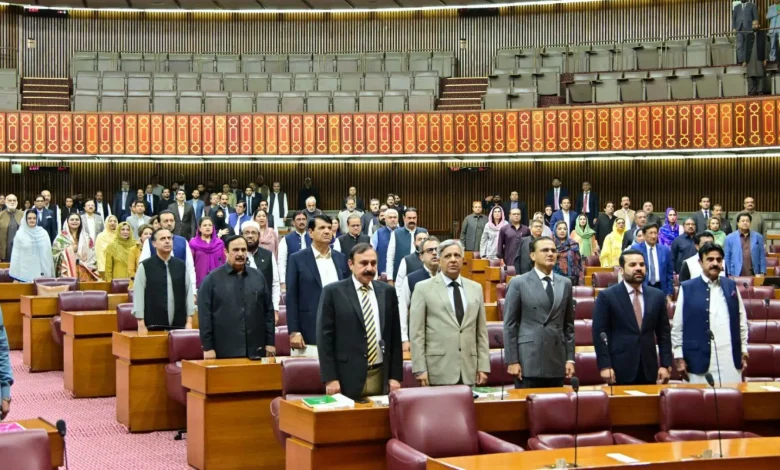
Upper house of parliament endorses emergency in KP, approving resolution by a majority vote
ISLAMABAD
The National Assembly (NA) and Senate on Wednesday endorsed President Asif Ali Zardari’s proclamation of emergency in Khyber-Pakhtunkhwa (K-P), passing a resolution by a majority vote despite opposition lawmakers’ objections to the imposition of emergency measures in the province.
The developments emerged after the federal government imposed emergency and governor’s rule in K-P on October 11, suspending the Pakistan Tehreek-e-Insaf (PTI)-led provincial administration amid a dispute over the province’s security situation and counter-terrorism measures. The government has defended the move, citing a deterioration in law and order and an alleged failure by the provincial administration to coordinate counter-terrorism efforts with federal authorities.
The NA session began under the Chairmanship of Speaker Ayaz Sadiq as Minister for Parliamentary Affairs Tariq Fazal Chaudhry presented the resolution before the House. During the proceedings, Chaudhry moved a separate motion seeking the suspension of question hour to allow the House to take up other parliamentary business. Opposition lawmakers opposed the motion, but it was adopted by a majority vote.
The Lower House later debated the emergency measures imposed in the province, with opposition lawmakers strongly opposing the Centre’s decision and raising a hue and cry during the proceedings. However, the resolution was passed by a majority vote. The NA session was subsequently adjourned until 11am on Friday.
Following the approval from NA, the Senate session was held under the chairmanship of Chairman Yousaf Raza Gilani. During the proceedings, the Senate also approved a motion moved by Senator Shahadat Awan to defer the question-and-answer session scheduled for the day.
Speaking in the upper house, Law Minister Azam Nazeer Tarar said Rules 132 and 133, which govern ordinary resolutions moved by private members, did not apply to a resolution introduced under a constitutional requirement. He added that the seven-day notice requirement was not applicable in this case.
Rejecting objections to the procedure, the law minister also said the government could not deviate from the Constitution or the rules and regulations of the House.
He maintained that members opposing the resolution should participate in the debate and, if they disagreed with it, reject it through a vote.