CUI brings researchers and policymakers together to examine solar radiation modification
ISLAMABAD
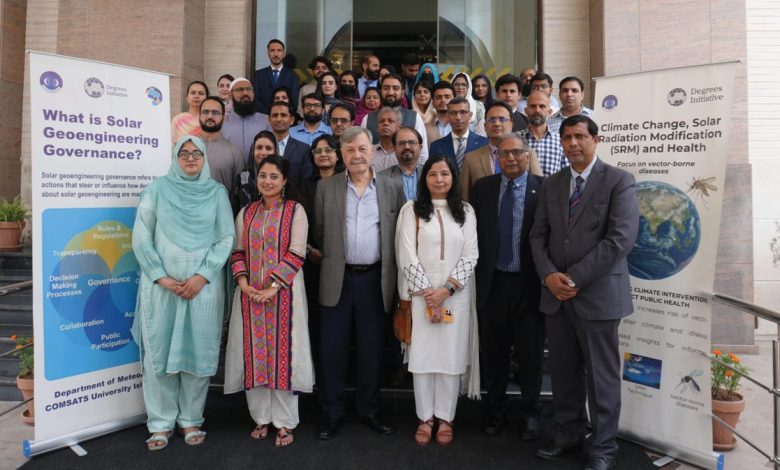
COMSATS University Islamabad (CUI) brought together senior policymakers, scientists, public health experts and international partners at a one-day workshop to examine emerging research on Solar Radiation Modification (SRM) and its possible implications for climate, health and policymaking in Pakistan.
The workshop, titled “Dissemination of SRM Research Findings and Sensitisation of Policymakers in Pakistan,” was graced by Prof. Dr. Raheel Qamar, T.I., Rector, CUI. Among the distinguished participants were Ms. Mowmita Basak Mow of The Degrees Initiative, UK; Ambassador Shafqat Kakakhel, Chairperson, SDPI; Ms. Zakya Rubab, Ministry of Climate Change and Environmental Coordination; Dr. Zaheer Ahmed Babar, Director General, Pakistan Meteorological Department; and Prof. Dr. Azra Yasmin, Pro-Vice Chancellor, Fatima Jinnah Women University, besides representatives of major national institutions and universities. Organized by the Department of Meteorology, CUI, with support from The Degrees Initiative, the workshop presented findings from Pakistan-based research on climate responses and drought under SRM, malaria transmission and vector-borne diseases. The programme also examined SRM governance and climate–health linkages and featured an SRM Malaria Dashboard and an interactive climate intervention game.
In his address, the Rector noted that the climate crisis is pushing humanity towards difficult choices in which technological solutions must be assessed alongside their possible environmental consequences. He emphasized the need for countries of the Global South to develop their own evidence and participate meaningfully in international discussions on emerging climate technologies.
Prof. Dr. Raheel Qamar appreciated the Department of Meteorology and its research team for securing international research funding and building collaborations beyond Pakistan. He reaffirmed CUI’s support for research that connects scientific inquiry with issues of national and global significance.
The workshop provided an opportunity for researchers and policymakers to discuss what is known about SRM, where uncertainties remain and what questions require further investigation. It also strengthened interaction among CUI, government institutions, researchers and international partners, creating a basis for continued research and policy engagement.
The event marked another step in CUI’s efforts to develop research with direct relevance to emerging national and global challenges, while providing Pakistan’s researchers and institutions a stronger voice in the evolving international conversation on SRM.