‘War against Pakistan, its armed forces is un-Islamic’: KP adviser
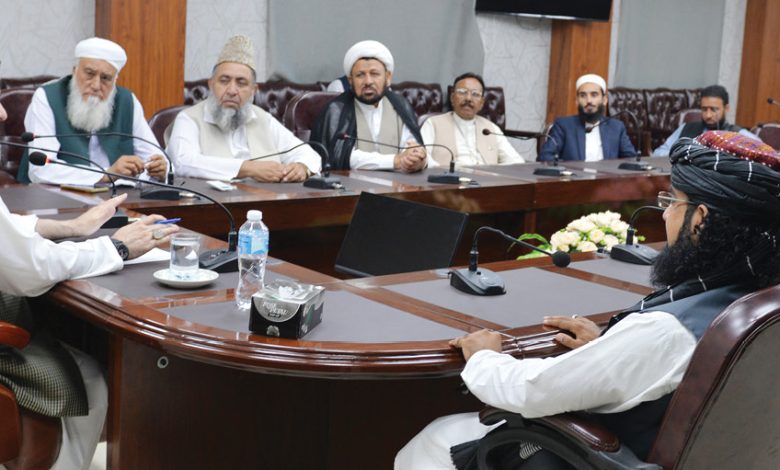
Adviser to the Khyber Pakhtunkhwa government on Auqaf, Hajj, Religious and Minority Affairs and coordinator of the Paigham-e-Aman Committee, Maulana Tayyab Qureshi, has said that the committee stands firmly with the Pakistan Army and civilian institutions in the fight against terrorism, declaring that taking up arms against the armed forces on Pakistani soil is forbidden in Islam.
Speaking at a press conference alongside members of the Paigham-e-Aman Committee, he said the committee aimed to promote the national narrative of Paigham-e-Pakistan, raise public awareness about peace and stability, and strengthen religious and social harmony.
Maulana Qureshi condemned activities directed against the state and its institutions, saying all segments of society must play their role in promoting national unity, solidarity and Pakistan’s security. Maulana Nazir Hussain, Mufti Obaidur Rehman and other committee members were also present.
He welcomed the defence agreement involving Pakistan, Turkiye and Saudi Arabia, saying the nation supported initiatives aimed at safeguarding the country’s sovereignty and security. He said national interests and the protection of the state must remain the foremost priorities.
Referring to the country’s founding principles, the adviser said Quaid-i-Azam Muhammad Ali Jinnah envisioned Pakistan as an Islamic welfare state where all citizens enjoyed equal rights without discrimination. He stressed the need to build a society based on peace, tolerance, justice and mutual respect.
He said the Paigham-e-Aman Committee would organise events at divisional levels across the province, bringing together religious scholars and people from different walks of life to promote the national narrative and strengthen social cohesion. The committee, he added, would work beyond ethnic, linguistic and regional divisions to unite people on a common platform.
Maulana Qureshi also welcomed the establishment of advisory councils for 12 districts, saying the forums could help identify public issues, facilitate consultation with relevant stakeholders and promote joint efforts to address local problems.
On mineral resources, he rejected what he described as negative propaganda surrounding the issue, saying the province’s mineral wealth should be utilised for public welfare, development and the broader national interest.
Discussing minority rights, he said forced religious conversion was unacceptable and called for the protection of minorities’ constitutional and legal rights, lives, property, places of worship and religious freedom. He also acknowledged the contributions of minority communities to the country’s development.
Emphasising the importance of interfaith and inter-sectarian harmony, he said tolerance and mutual respect were essential for a peaceful and stable society.
Maulana Qureshi reiterated that the committee would continue working to promote national unity, religious tolerance, respect for state institutions and lasting peace in KP and across the country.