‘No intelligence suggests’ Iran planned to attack US first
Trump has argued, without evidence, that Iran was on track to soon secure ability to strike US with ballistic missile
Pentagon tells Congress
Washington
Trump administration officials acknowledged in closed-door briefings with congressional staff on Sunday that there was no intelligence suggesting Iran planned to attack US forces first, two people familiar with the matter said.
The United States and Israel launched their most ambitious attacks on Iran in decades on Saturday, martyring Supreme Leader Ayatollah Ali Khamenei, sinking Iranian warships and hitting more than 1,000 targets so far, officials say.
But Sunday’s remarks to Congress appeared to undercut one of the key arguments for the war made by senior administration officials.
They told reporters the day before that President Donald Trump decided to launch the attacks in part because of indicators that Iranians might strike US forces in the Middle East “perhaps preemptively.”
Trump, one of the officials said, was not going to “sit back and allow American forces in the region to absorb attacks.”
Pentagon briefings lasted over 90 minutes
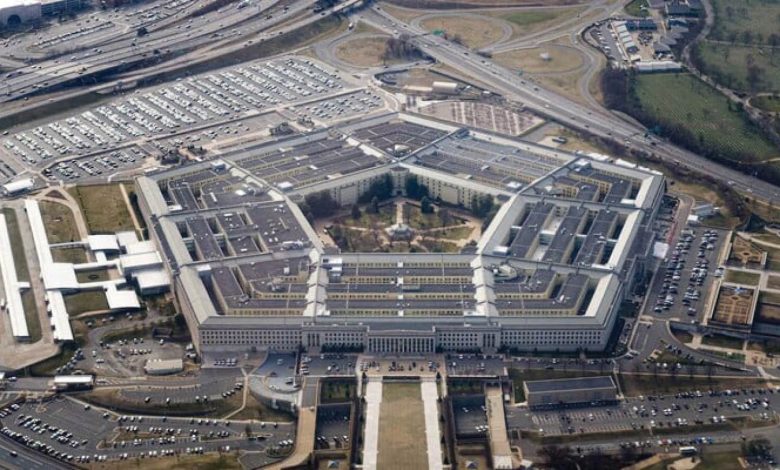
Pentagon officials briefed Democratic and Republican staff of several national security committees in both the Senate and the House of Representatives for more than 90 minutes on the unfolding US attack in Iran, White House spokesperson Dylan Johnson said earlier.
In the briefings, administration officials emphasised that Iran’s ballistic missiles and proxy forces in the region posed an imminent threat to US interests, but there was no intelligence about Tehran attacking US forces first, the two sources, speaking on condition of anonymity, told Reuters.
Trump said the attack, which is expected to run for weeks, aimed to ensure Iran could not have a nuclear weapon, contain its missile program and eliminate threats to the United States and its allies.
He has urged Iranians to rise up and topple the government.
Democrats criticise ‘war of choice’
Still, Democrats have accused Trump of waging a war of choice and have taken aim at his arguments for abandoning peace talks that mediator Oman said still held promise.
Trump has argued, without presenting evidence, that Iran was on track to soon secure the ability to strike the United States with a ballistic missile.
His missile claim was not backed by US intelligence reports, and appeared to be exaggerated, sources familiar with the reports have told Reuters.
Questions about the justification for the war come as the US military revealed on Sunday the first American casualties of the conflict.
Scepticism on regime change
Following the martyrdom of Iran’s Supreme Leader Khamenei, many senior US officials remain sceptical that the US and Israeli military operation against the Islamic Republic will lead to regime change in the near term.
Before and after the start of the attack, US officials, including US President Trump, had suggested that toppling the nation’s repressive governing system was one of several US goals, in addition to crippling Iran’s ballistic missile and nuclear programs.
“I call upon all Iranian patriots who yearn for freedom to seize this moment … and take back your country,” Trump said on Sunday in a video posted on Truth Social.
But three US officials familiar with US intelligence said there is serious scepticism that Iran’s battered opposition can topple the theocratic, authoritarian governing system that has been in place since 1979.
No officials consulted by Reuters completely ruled out the possibility of the fall of Iran’s government, which currently is buffeted by key personnel losses from ongoing US and Israeli air strikes and is deeply unpopular following a January round of extraordinarily violent repression.
But it is far from likely or even probable in the near term, they said.
Reuters reported earlier that Central Intelligence Agency assessments presented to the White House in the weeks before the Iran attack concluded that if Khamenei was killed, he could be replaced by hard-line figures from the Islamic Revolutionary Guard Corps or equally hard-line clerics, two sources said.
One US official with knowledge of internal White House deliberations said IRGC officials are unlikely to voluntarily capitulate in part because they have benefited from a vast patronage network designed to maintain internal loyalty.