CM set out KP Govt’s policy direction and implementation priorities for new FY

Peshawar
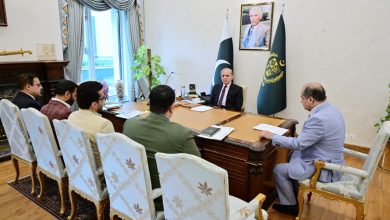
Chief Minister Khyber Pakhtunkhwa Muhammad Sohail Afridi has set out the Provincial Government’s policy direction and implementation priorities for the new financial year, issuing clear directives to Cabinet members and Administrative Secretaries on governance, public service delivery, accountability, effective communication, development works execution, and institutional performance. Addressing a special meeting of Provincial Cabinet members and Administrative Secretaries, the Chief Minister said that, following the approval of the provincial budget and the commencement of the new financial year, the entire government machinery must move into execution mode and deliver as per the priorities and targets set in line with the vision of Imran Khan. The Chief Minister directed Ministers, Advisors, Special Assistants, and Administrative Secretaries to maintain close coordination and ensure that all government decisions are taken through consultation and strictly on the basis of merit, transparency, and public interest. He reiterated zero tolerance for corruption, incompetence, and underperformance. All departments were directed to identify and eliminate opportunities for corruption at every level, including in service delivery and financial management.
The Chief Minister authorized Ministers, Advisors, and Administrative Secretaries to take immediate and non-discriminatory action against corrupt, incompetent, and non-performing officers. He made it clear that no officer failing to deliver, implement departmental priorities, or meet public expectations would be protected on the basis of personal influence, connections, or patronage. The Chief Minister declared citizen satisfaction as the primary measure of government performance. He directed that departmental performance would not be assessed on the basis of presentations, reports, WhatsApp updates, or social media visibility, but on measurable improvements in service delivery, public access to government services, timely resolution of grievances, and citizen satisfaction.
“All government decisions must serve the public interest, and citizens must receive services and relief at their doorstep,” the Chief Minister said.
Departments were directed to undertake restructuring, institutional reforms, digitization, and other necessary measures to improve service delivery and public access to government services. The Chief Minister assured full support from the Provincial Government and the Chief Secretary Office for reforms that produce tangible benefits for citizens.
The Chief Minister directed every department to develop and implement a comprehensive communication strategy. Departments must proactively communicate government reforms, development projects, public services, and citizen-focused initiatives. The Chief Minister stressed that citizens cannot benefit from reforms and services they are unaware of, and that government performance has limited public impact if information about available services and interventions does not reach intended beneficiaries. He directed all departments to ensure systematic and sustained communication of government initiatives across Khyber Pakhtunkhwa and at the national level.
The Chief Minister directed every Minister to visit at least seven districts each month and said them to move beyond office-based meetings, maintain a regular field presence, engage directly with citizens, inspect service delivery, identify implementation gaps, and ensure immediate action on public issues. Further, Each Minister was directed to prepare a formal district visit schedule and submit it to the Chief Minister’s Secretariat and the Office of the Chief Secretary. The Chief Minister directed every department to establish a dedicated complaint cell and integrate it with the Chief Minister’s Complaint Cell and announced that he would personally assess public complaints, departmental response, grievance resolution, and citizen satisfaction on a daily basis. Failure to ensure timely resolution of public complaints would result in strict action against the officers responsible. On development execution, the Chief Minister directed all departments to align implementation with the priorities set out in the provincial budget and Annual Development Programme and accelerate execution of all approved development projects. Signature projects reflecting the vision of Imran Khan were to receive immediate and highest implementation priority. The Chief Minister made it clear that delays, weak execution, and negligence in these projects would not be tolerated. All departments were directed to complete DFC schemes within the current financial year. For new development schemes, departments must set clear implementation timelines, including deadlines for finalization of schemes and commencement of physical work.
The Chief Minister further directed that any matter referred by the Chief Minister’s Secretariat must produce a substantive response and demonstrable action within 24 hours. All departments were directed to ensure time-bound implementation of initiatives under the Chief Minister’s Good Governance Roadmap. Administrative Secretaries were instructed to take ownership of departmental targets, deliverables, and implementation timelines.
The Chief Minister also directed strict oversight of district-level service delivery and zero tolerance for negligence, delays, and poor performance affecting citizens. He announced that implementation of all directives and progress against assigned targets would be reviewed after three months. Performance of Ministers, Advisors, Special Assistants, and Administrative Secretaries would be assessed against implementation of directives, achievement of targets, improvement in service delivery, and tangible outcomes for citizens. The Chief Minister made it clear that performance would determine accountability and recognition. Members of the Provincial Cabinet, the Chief Secretary, the Additional Chief Secretaries, and Administrative Secretaries of provincial government departments attended the meeting.