CASS organised seminar on “Pakistan-India Relations: Deterrence, Rivalry, and the Contours of Stability”
Lahore
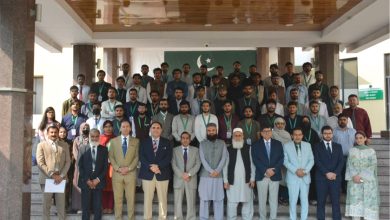
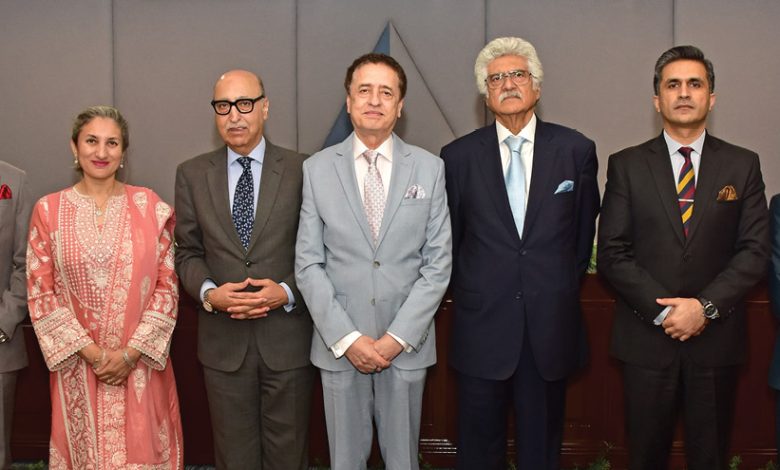
The Centre for Aerospace and Security Studies (CASS), Lahore, organised a seminar titled “Pakistan-India Relations: Deterrence, Rivalry, and the Contours of Stability” on 23 September 2026. Academics, intellectuals, senior officers, and domain experts attended the event. Mr Ameer Abdullah Khan, Senior Research Associate, CASS Lahore, delivered the opening address.
Ambassador Abdul Basit (Retd), former High Commissioner of Pakistan to India, traced the relationship’s trajectory from the productive 2004-2008 engagement through the ruptures of the Mumbai attacks, the 2016 Uri strikes, the 2019 Pulwama crisis, and the 2025 Pahalgam confrontation. He attributed India’s current disengagement to its growing economic confidence and the BJP’s domestic political interests, arguing this posture helps consolidate India’s position in Kashmir after the 2019 revocation of Articles 370 and 35A. He maintained that normalisation is impossible while Kashmir stays unresolved. He asserted that only reciprocal diplomacy can help resolve the outstanding conflicts and urged for strategic clarity in dealing with India.
Ambassador Zamir Akram (Retd), Advisor SPD, traced the rivalry’s deeper roots to India’s pursuit of regional hegemony rather than Kashmir alone, explaining New Delhi’s reluctance to accept parity with its neighbours. He traced Indian doctrine’s evolution from Cold Start to the newer “dynamic response strategy,” an attempt to carve space for limited conventional war beneath the nuclear threshold, paired with sub-conventional tools including proxy support and the abeyance of the Indus Waters Treaty. He characterised India’s use of dual-capable systems such as BrahMos in 2025 as a further lowering of the nuclear threshold, crediting Pakistan’s calibrated response with restoring deterrence without inviting escalation.
Dr Salma Malik, Associate Professor, Quaid-i-Azam University, Islamabad, opened with the recent collision between Indian and Pakistani naval vessels in the Arabian Sea, as evidence of how easily a routine incident can reopen a crisis under present conditions. Auditing the post-2025 “new normal,” she cited India’s rejection of the Permanent Court of Arbitration’s ruling on the Indus Waters Treaty, a prospective “Operation Sindoor 2.0,” Kashmir’s unresolved status alongside the deteriorating treatment of India’s Muslim minority, and fraying crisis-management mechanisms as converging sources of instability. She argued that nuclear deterrence can prevent only a planned war, not an accidental one.
Air Marshal Asim Suleiman (Retd), President CASS Lahore, delivered closing remarks. He observed a structural shift in India’s approach to limited conflict below the nuclear threshold, reflecting its hegemonic ambitions and Hindutva’s influence on its political outlook towards Pakistan. India’s continued resistance to dialogue, reinforced by rhetoric around Operation Sindoor 2.0 and assertions that terror and talks cannot coexist, limits direct engagement. He identified Kashmir and the IWT as key flashpoints, noting that coercive pressure cannot resolve underlying disputes and only deepens economic and strategic costs. He called for a coherent grand strategy based on political stability, economic and technological strength, conventional and strategic deterrence, and diplomacy, alongside responsible crisis management to manage escalation and preserve regional stability.
The seminar concluded with an interactive session, during which participants discussed deterrence modernisation, crisis-management mechanisms, and the diplomatic and legal avenues available to Pakistan for managing an increasingly fragile relationship with India.