Taking Kharg Island would pose risks for US troops
WASHINGTON
President Donald Trump has intensified his rhetoric regarding a potential seizure of Iran’s Kharg Island, vowing to take the major oil terminal in the “not too distant future” to “assume total control of their Oil and Gas Markets.”
While the president has used social media to escalate threats against the island, he has also acknowledged the complications of a ground invasion. In recent comments to Fox News, Trump stated his “preference” would be to take the island to make a “fortune” for the US, but he questioned if the American people had “the stomach for it,” adding that he “does not want to have to put boots on the ground.”
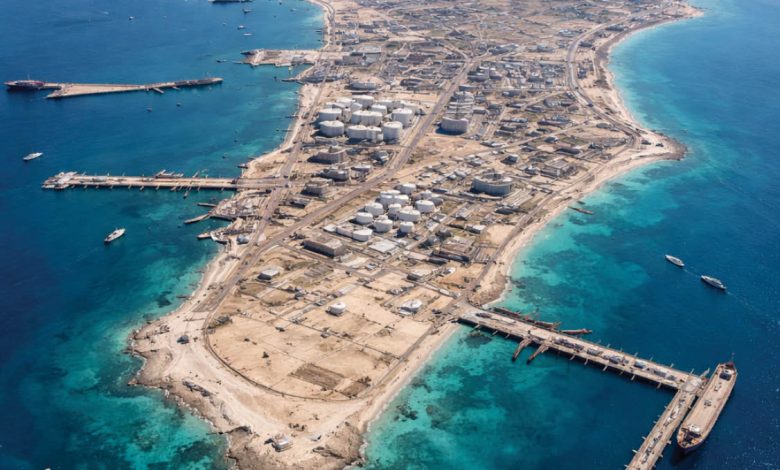
A critical energy lifeline Kharg Island is a small rocky outcrop located approximately 15 to 16 nautical miles off the Iranian coast. It serves as a vital economic hub, processing 90 percent of Iran’s crude oil for export via deep-water jetties that can accommodate very large tankers.
The BBC reports that “Ninety percent of Iran’s crude oil comes through a terminal on the island,” which provides a major source of revenue for the Islamic Revolutionary Guard Corps (IRGC). However, Reuters notes that a seizure might not have an “immediate impact” on the Iranian economy, as the country’s oil exports have already been severely curtailed by the war that began Feb. 28.
Military strikes and spared infrastructure The US military has already conducted significant operations against the site. On March 13, the US launched what Trump described as “one of the most powerful bombing raids in the History of the Middle East,” claiming to have “totally obliterated” every military target on the island.
US Central Command (Centcom) confirmed that while more than 90 military targets were struck— including naval mine storage and missile bunkers— the oil infrastructure was intentionally preserved “for reasons of decency” and to avoid long-term economic damage. Trump noted that while he has held off on destroying the pipelines, he could do so on “five minutes’ notice.” According to the BBC, Iranian state media reported that the March attacks targeted air defenses, a naval base, an airport control tower, and a helicopter hangar, but failed to stop oil exports.
Strategic risks and troop vulnerability Military analysts warn that a physical seizure of the island would be “challenging.” Experts Ryan Brobst and Cameron McMillan of the Foundation for Defense of Democracies told Reuters that an occupation “is more likely to expand and extend the war than it is to deliver any sort of decisive victory.”
Joseph Votel, a former commander of US Central Command, told TWZ.com that while 800 to 1,000 troops could hold the island, they would require massive logistical backup and remain “very vulnerable.” Furthermore, analysts warn that US troops would be exposed to “camera-wielding” drones, which the Iranian regime could use to broadcast “the graphic deaths of American service members as propaganda.”
Iranian defenses and threats of retaliation Iran has responded to the threats by reinforcing its defenses. The BBC reports that Tehran has deployed additional military personnel, shoulder-fired surface-to-air missiles, and “traps,” including anti-personnel and anti-armor mines, in the surrounding waters.