Economy expands to $452b, GDP grows 3.7%
Per capita income up 9% to $1,901; remittances to cross $41b as fiscal deficit falls to 0.7%
Pakistan Economic Survey
Islamabad
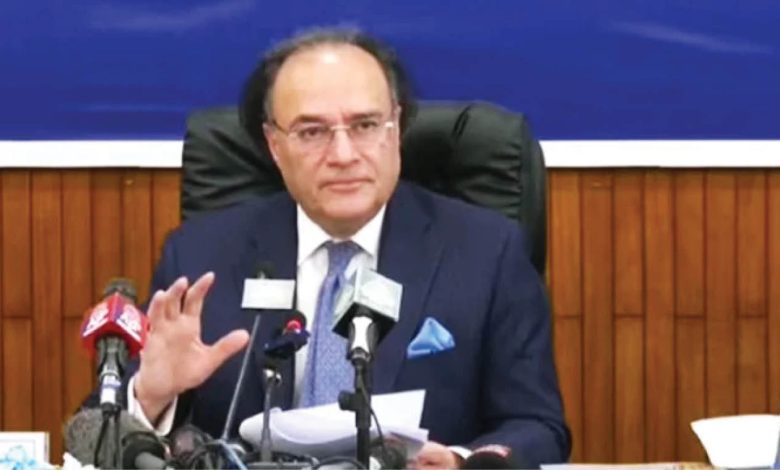
Finance Minister Muhammad Aurangzeb on Thursday unveiled Pakistan Economic Survey 2025-26, where he presented the main features of the annual report.
He said the economic survey “is not only an economic document, but it also tells a story about the past of one year, in terms of resilience, the discipline maintained and the renewed confidence”.
“When we entered this fiscal year in July, the first thing we faced was trade uncertainty, which was on account of tariff discussions on how to deal with duties around the world. We reached a point by the end of July where we could get into a competitive position in respect of our exports, especially to the US,” he said.
Right after that, he mentioned, Pakistan faced floods in August and September, which led to rescue and relief efforts for the rehabilitation of people and the reconstruction of infrastructure. The story did not end here, as in March, a regional conflict broke out.
Aurangzeb pointed out that out of these three exogenous factors, only the tariff uncertainty prevailed at the time of presentation of the previous economic survey. “The other factors were not there in the picture.”
The fiscal deficit stood at 0.7% of GDP, while the primary balance remained in surplus. Federal Board of Revenue (FBR) revenues increased by 10.1%, and the current account posted a surplus of $72 million. The tax base has doubled in a few years from Rs7 trillion to Rs13 trillion. FBR revenues saw a 46% increase in June 2026, and tax revenue grew 40% over the past two years. Private sector credit stood at $11.57 billion.
Inflation has come as a result of the second-order impact of the international oil surge, but overall energy has been managed well. “In April, the oil import bill rose by $1 billion, but in May Pakistan managed to restrict the increase to $500 million,” Aurangzeb said. Pakistan’s total installed electricity capacity is 49,651 MW, comprising hydel (23.4%), thermal (49.2%), nuclear (7.1%) and renewables (20.3%).
However, he added, these challenges put to the test the resilience of Pakistan, which dealt well with them and continued on the path from stabilisation to growth. In that regard, he highlighted that the country’s GDP growth remained at 3.7% in fiscal year 2025-26.
“We have made a broad-based recovery despite the conflict that has hurt the region as well as the entire world. Owing to this, the global growth fell to 3.1% in 2026,” he elaborated.
In spite of the global and domestic challenges, Pakistan registered a four-year high growth rate of 3.7% in FY26. Recalling the journey from where the current government started off, he said that in FY 2022-23, Pakistan’s growth rate was negative 0.2%, in FY24 the growth reached 2.6%, and in FY25 it touched 3.2%.
Earlier, the finance ministry, planning ministry and State Bank of Pakistan were of the unanimous view that economic growth in FY26 would exceed 4%, however, the Middle East conflict constrained economic expansion. Still, he said, Pakistan reached the biggest economic size in its history at Rs126.9 trillion, or $452.1 billion. Similarly, per capita income rose to $1,901 compared to last year’s level of $1,751.


