ZHOB
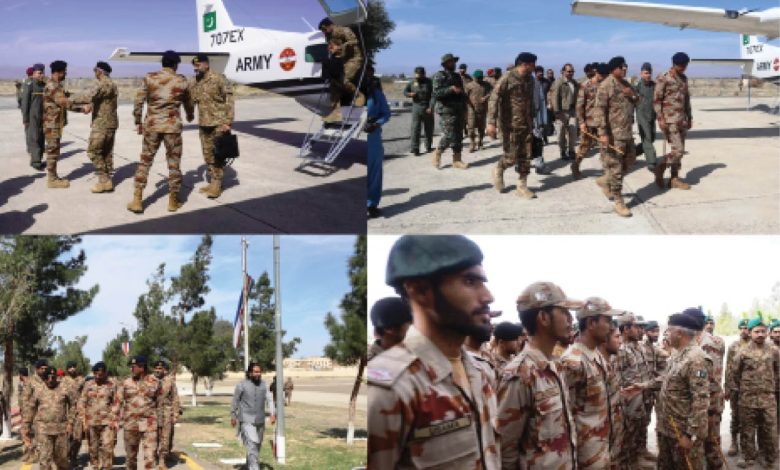
Commander 12 Corps Balochistan Lieutenant General Rahat Naseem Ahmed Khan visited the Sambaza sector in Zhob along the Pakistan–Afghan border. The top military official was flanked by the Inspector General Frontier Corps Balochistan (North) Maj Gen Muhammad Atif Mujtaba and Commandant Zhob Militia Brigadier Azhar Khan.
During the visit, the Corps Commander, Lt Gen Rahat Naseem Ahmed Khan, reviewed border security arrangements and inspected key border posts. He also interacted with troops deployed along the frontier, commending their courage, professionalism, and sacrifices in operations against militants. The resolve and operational readiness of Frontier Corps Balochistan in maintaining security along the volatile border belt were also acknowledged during the day-long visit.
Maj Gen Muhammad Atif Mujtaba reviewed the security situation in the Zhob sector. He visited the strategically important Gudwana enclave, a 32-square-kilometer area recently secured by security forces, and inspected forward bunkers and operational posts.
The IGFC praised officers and soldiers for their resilience and steadfastness in safeguarding the frontier, reaffirming the force’s commitment to maintaining vigilance and ensuring stability in the border region.
Meanwhile, Commandant of the Zhob Militia, Brigadier Azhar Khan also reaffirmed that the Pakistan Army and the paramilitary force, the Frontier Corps Balochistan, are unwavering in their noble mission to safeguard the nation’s frontiers, maintain law and order, and promote public welfare.
It is worth mentioning that Jawans of the Pakistan Army have long guarded the country’s frontiers from the rugged mountains of Balochistan to the snow-covered heights of the north. Deployed at remote posts far from their families, troops endure harsh weather, isolation, and constant security threats to protect the country’s territorial integrity. Over the years, many officers and soldiers have lost their lives and embraced Shahadat while confronting militant groups, patrolling volatile border regions, and protecting local communities.