Mian Zahid Hussain terms 2025 a year of economic stability; calls for transition to sustainable growth in 2026
Islamabad
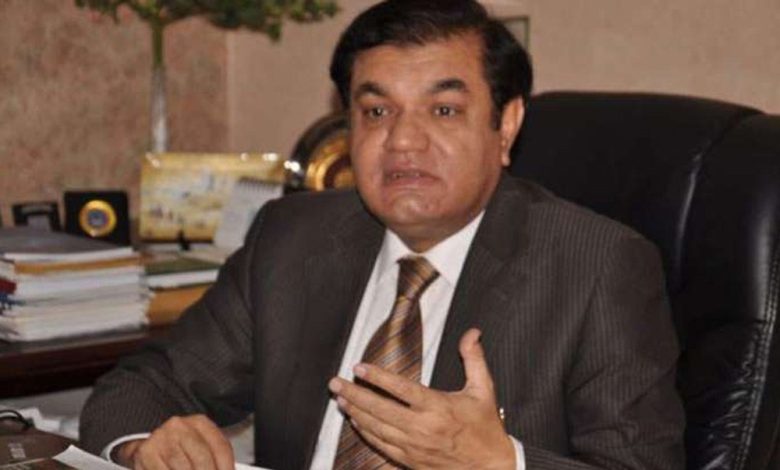
Mian Zahid Hussain, President of the Pakistan Businessmen and Intellectuals Forum and All Karachi Industrial Alliance, as well as Chairman of the National Business Group Pakistan and FPCCI Policy Advisory Board, stated during a year-end review that 2025 was a year of significant progress in macroeconomic stability for Pakistan.
He noted that the stock market index witnessed a record 52% increase this year, rising from 115,000 to 174,000 points. However, he cautioned that high production costs, stagnant exports, and security concerns continue to serve as major hurdles to the nation’s progress.
The former provincial minister highlighted that inflation, which had previously reached 38%, has dropped to 6.1% as of November, 2025 due to the State Bank of Pakistan’s strict monetary policies.
He observed that the Federal Board of Revenue is making progress toward its tax target of 14.13 trillion PKR for the 2025-26 fiscal year despite facing extraordinary pressure.
Furthermore, foreign exchange reserves reached 16 billion USD, supported by timely IMF tranches and rollovers from friendly countries, while foreign direct investment fell by 25% to roughly one billion USD in July-November of FY26 despite best efforts of the Special Investment Facilitation Council (SIFC).
Regarding the industrial landscape, Mian Zahid Hussain warned that electricity rates exceeding 35 PKR per unit and high policy rate @10.5% have made the cost of doing business in Pakistan the highest in the region. While he lauded the successful privatization of PIA as a positive step, he expressed concern over the delays in the privatization of power distribution companies.
He noted, however, that the Privatization Commission’s shortlisting of international investors for various state-owned enterprises remains a vital step forward.
On the social front, he expressed deep concern that poverty has reached approximately 44% and youth unemployment stands at 7.1%. With GDP growth expected to remain between 3% and 3.6%, he emphasized that poverty and unemployment will continue to be significant challenges.
Conversely, he pointed to workers’ remittances as a major economic pillar, expected to exceed 38 billion USD or 11 trillion PKR by the end of the fiscal year, which will help manage the current account deficit and mitigate poverty.
Discussing regional security, he mentioned that while Pakistan’s global prestige was raised by a robust win of a brief war with India in May 2025 and the effective military strategy of Field Marshal Asim Munir, the resurgence of terrorism and border tensions have negatively impacted investor confidence.
He stressed that economic prosperity is fundamentally dependent on internal security and regional peace. For the upcoming year, he identified the completion of the second phase of CPEC and the expansion of the export base as essential requirements for the country.
Mian Zahid Hussain concluded that the primary challenge for 2026 is transitioning from mere stability to sustainable development. He urged the government to prioritize a significant reduction in energy prices to 9 cents per unit, the revival of the industrial sector, the inclusion of the agricultural and retail sectors in the tax net, and the overall digitalization of the economy.
He assured that the business community would continue to fully support all positive government initiatives aimed at achieving a stable and prosperous Pakistan in 2026.