Azhar says lack of vision, instability hurting Pakistan cricket
KARACHI
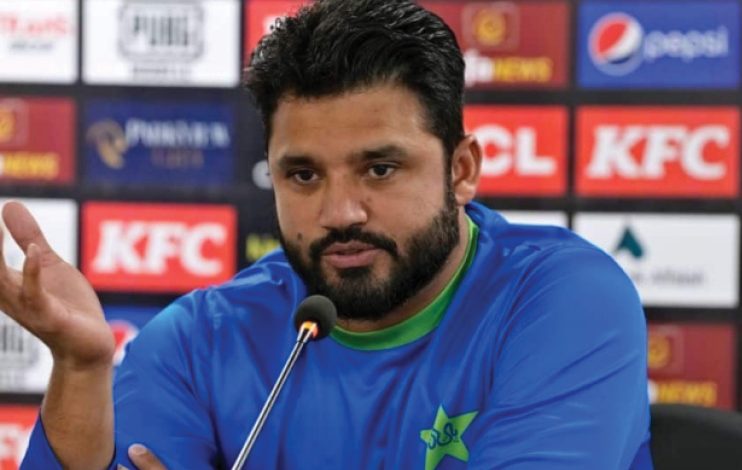
Former captain Azhar Ali has blamed a lack of vision, instability and concerns over job security among decision-makers for the repeated upheavals in Pakistan cricket, emphasising the game’s establishment in the country must first identify its problems before embarking on a long-term reform process.
Azhar’s comments came in the wake of Pakistan Cricket Board’s (PCB) decision to sack red-ball head coach Sarfraz Ahmed — who had taken up the job only months earlier and overseen five defeats in six Tests — and hand charge of the side to white-ball coach Mike Hesson for the third Test in England, send seven players home and replace bowling coach Umar Gul with Australian Ashley Noffke.
Selection committeee member Misbah-ul-Haq subsequently resigned after reportedly not being consulted over the changes, while several former players and coaches criticised the timing of the shake-up with the series still in progress. “The real problem is the lack of vision among the people working at the PCB. It also raises questions about the competence of the people making these decisions,” Azhar said when contacted by DNA on Wednesday.
“Job security seems to be the biggest concern. When you are trying to save your job, competence goes out of the window. If cricketing decisions are not being taken by cricketers, then it is also the fault of the cricketers themselves.” Pakistan suffered massive defeats in the first two Tests — by an innings and 103 runs at and by 194 runs at — leaving England with an unassailable 2-0 lead in the series.
The ex-Test batter said constant changes had also created insecurity among the players, who were struggling to cope with uncertainty surrounding the team. “It creates insecurity among the players. You can see it in their body language. They are under mental stress and are not able to absorb everything that comes with these decisions,” he said. Azhar, however, said difficult decisions were sometimes necessary but needed to be taken within a stable and clearly defined system.
“There are times when you have to make hard decisions, and I think those decisions should be made but the players need to feel that they have some security and that they can stand their ground.” The 39-year-old identified instability and inconsistency across several areas of the game as major reasons for Pakistan’s decline over the past five to six years. “There has been instability and inconsistency all around — political instability, changes in coaching and changes in selectors,” he said.
“The people running the cricket board are trying to save their job, while the players in the team are also thinking about their own future. I don’t blame the players for that. If I am in their position, I will also think about myself.” The former captain said Pakistan needed to resist the temptation of repeatedly changing direction and instead conduct an honest assessment of where its cricket stood.
“First of all, we have to make sure that we know what our problem is. If you don’t know the problem, there can be no introspection and no realisation. Until you realise where you stand, the journey towards improvement cannot begin,” he said. Azhar proposed involving former and current top cricketers in assessing the state of Pakistan cricket before drawing up a long-term plan.
“I would like to see our top cricketers sit together and talk about what they think is wrong with Pakistan cricket and find the right solutions collectively before laying a proper five-year road map. We [then] have to be patient and consistent with it,” he said. “You cannot keep taking one step forward and two steps back.”
He was optimistic that a properly structured system could restore Pakistan’s competitiveness even if it did not immediately produce a world-beating side. “I guarantee that if we do this properly, we will not become world-beaters, but we will at least be able to compete. Fans will enjoy watching Pakistan play. Currently, we are becoming irrelevant,” he added.
Azhar also rejected the idea that technical deficiencies among individual players were the principal reason for Pakistan’s struggles, saying the system responsible for developing them needed more scrutiny. “The ability is there in everyone. If your system supports players properly, they can perform at international level.
Technical issues do not matter as much as people think. If our best players are not ready, then we have to look at the system,” he insisted. “We have to ask ourselves: why have Babar and Rizwan gone backwards? We have to look at how we have wasted these players and why they have declined.” PCB chairman Mohsin Naqvi on Wednesday, defended the board
s decisions, saying the changes made during the ongoing England tour were necessary after careful consideration.