G20 countries should consider more trade barriers with China to cut imbalances, US treasury chief says
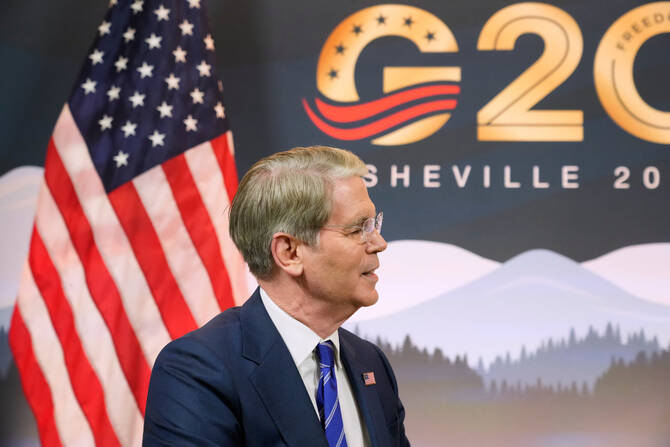
ASHEVILLE, North Carolina: US Treasury Secretary Scott Bessent said on Sunday he will encourage G20 members to re-examine terms of trade with China to shrink global imbalances and press Beijing to rebalance its economy away from exports and toward domestic consumption.
Bessent said in an interview ahead of a G20 finance leaders meeting that the current flood of exports from China was unsustainable, even though the US direct trade position with China was “rapidly improving.”
“The world cannot have a China with a $1.2 trillion trade surplus,” Bessent said. “In China, the economy is quite weak, and they are trying to export their way out of it, and they need to rebalance their economy.”
Bessent’s push to mobilize a coordinated trade response to China comes as legal setbacks force the US to rebuild its tariff policy, which had sharply reduced imports from China but led to an influx of Chinese imports elsewhere, especially to Europe and Latin America.
The US has walled off its economy from many Chinese goods with high tariffs and outright bans on some products including autos. Bessent said he told other industrial economies last year they would face pressures from the China import surge and that “now they are confronted with some very stark choices.”
He said it will be up to other countries to give China an incentive to shift away from exports and strengthen its chronically weak domestic demand.
“The rest of the world is going to have to examine their terms of trade with China,” Bessent said.
The US is pushing for a G20 joint statement on reducing trade and current account imbalances. China’s embassy in Washington could not immediately be reached for comment on its view of the effort.
Tariffs imposed since US President Donald Trump returned to office in 2025 have helped cut the US trade deficit with China for the first six months of 2026 by a third from the same period of 2025, to $73.9 billion, according to US Census Bureau data. Some acceleration of Chinese imports occurred in January of the year-earlier period as importers tried to beat anticipated tariffs.
Although some economists and European leaders have called for a coordinated effort to strengthen China’s yuan, Bessent questioned the effectiveness of such a move. The International Monetary Fund has assessed the yuan to be undervalued by as much as 21 percent.
Suggestions that a new “Plaza Accord” – the 1985 agreement to strengthen currencies against the dollar – was the answer to reducing imbalances are misguided, he said, calling this “an easy way to get around dealing with the real trade problem,” which he said was excessive Chinese industrial subsidies and weak domestic demand.