Lindsey Graham remembered for a vision of American foreign policy that’s fading in Washington
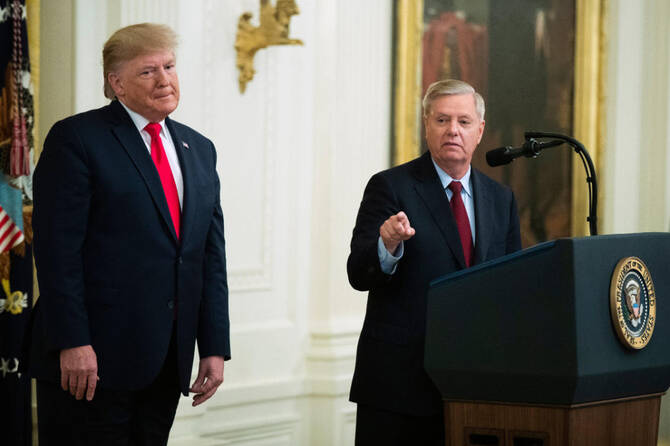
For decades Lindsey Graham traveled the globe selling a vision of the United States as a nation willing to use its military might to protect democracies around the world, even as his party was taken over by a president openly skeptical of that worldview.
Graham — who died unexpectedly at 71 on Saturday night — was a rare bridge between President Donald Trump’s “America First” foreign policy and the traditional Washington consensus prioritizing alliances with Europe and Israel, one falling out of favor with many in both political parties.
With that idea of the US, Graham remained a staunch defender of Ukraine to the end, even as Trump’s commitment wavered.
Graham represented South Carolina in the House and Senate for more than three decades. He died after what a preliminary report from the Washington, D.C., medical examiner’s office said was a tear in his aorta. The senator’s death triggered praise from leaders and diplomats around the world and condemnation from Iran and other countries where he’d agitated for military action.
“In an increasingly isolationist America, Sen. Graham was one of the last titans of the Senate who favored a muscular and engaged US foreign policy,” said Paul Foldi, a former diplomat and top Republican staffer on the Senate Foreign Relations Committee. “He is irreplaceable.”
Trump, whom Graham opposed, then embraced, won the White House partly by harnessing voters’ disgust with wars in Iraq and Afghanistan — both of which were championed by Graham’s wing of the Republican Party.